



A healthy smile starts long before your child's permanent teeth appear. One of the most common questions parents ask is: "What is the difference between baby teeth and permanent teeth and why is it important to care for both?"
Understanding how baby teeth develop and transition into permanent teeth helps parents protect their child's oral health, prevent tooth decay and support proper jaw growth. Early dental care also establishes healthy habits that last a lifetime.
At Dental Essential, Panvel, we provide comprehensive paediatric dental care to ensure every child enjoys healthy teeth and confident smiles throughout every stage of development.
What Are Baby Teeth?
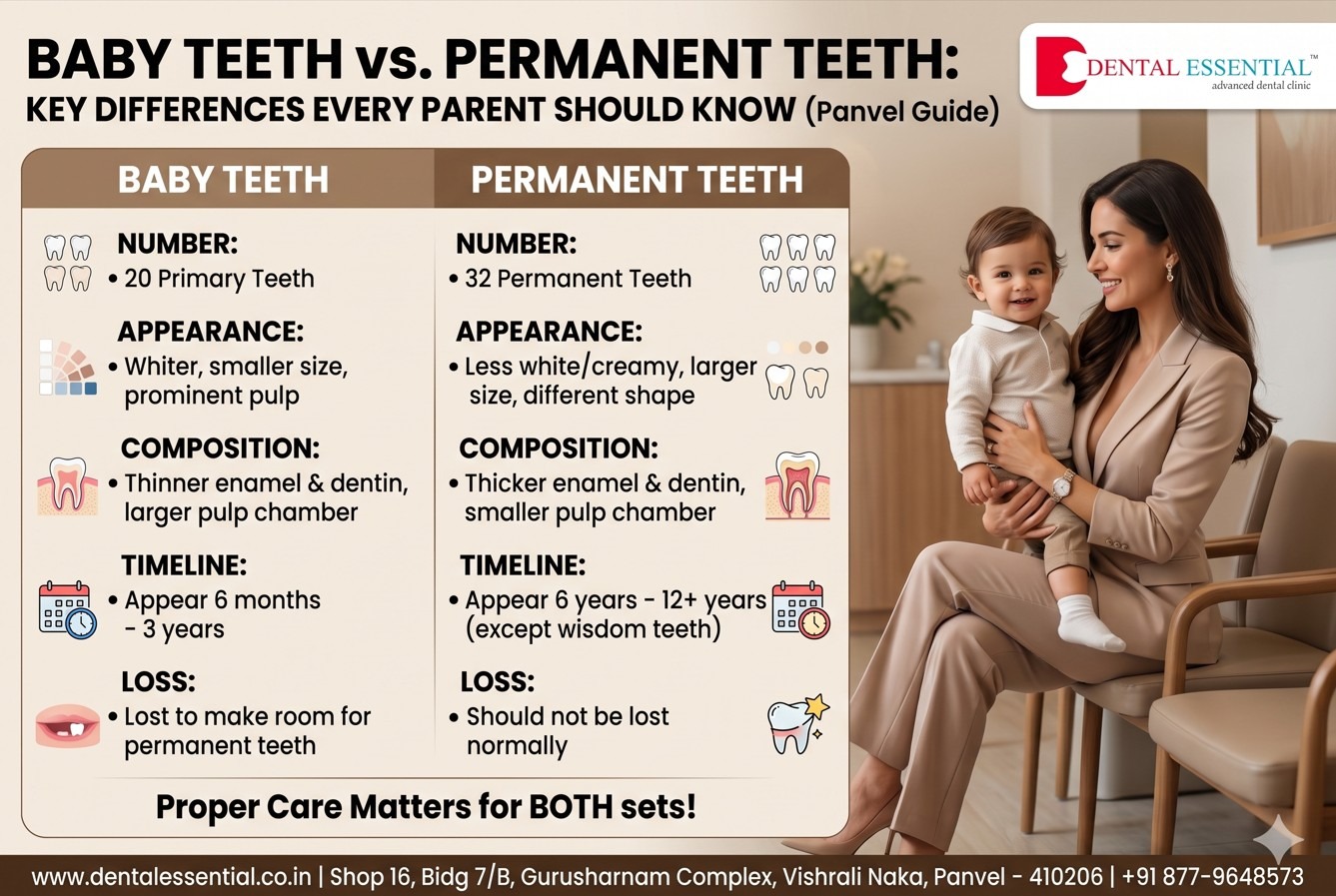
Baby teeth, also called primary teeth, milk teeth or deciduous teeth, are the first set of teeth that develop in children. They usually begin erupting around 6 months of age and by approximately 3 years, most children have a complete set of 20 baby teeth.
Baby teeth are:
Although temporary, baby teeth play a crucial role in your child's overall growth and development.
Why Baby Teeth Are More Important Than Many Parents Realize
Many parents assume that baby teeth don't need much attention because they will eventually fall out. However, this is one of the biggest misconceptions in children's dental care.
Healthy baby teeth help:
If baby teeth develop cavities or are lost too early, children may experience infections, pain, difficulty eating and future orthodontic problems.
Baby Teeth Eruption Timeline
Although every child develops differently, the general eruption schedule is:
Central Incisors — 6–12 months
Lateral Incisors — 9–16 months
First Molars — 13–19 months
Canines — 16–23 months
Second Molars — 23–33 months
Regular dental check-ups help monitor whether teeth are erupting normally.
What Are Permanent Teeth?
Permanent teeth, also called adult teeth, gradually replace baby teeth beginning around 6 years of age. These teeth are designed to last throughout adulthood with proper care.
A complete permanent dentition usually includes 32 teeth, including wisdom teeth.
Permanent teeth are:
Unlike baby teeth, permanent teeth do not naturally grow back if lost.
Permanent Teeth Eruption Timeline
Most permanent teeth erupt according to the following schedule:
First Molars & Lower Central Incisors — 6–7 years
Lateral Incisors — 7–8 years
First Premolars — 9–11 years
Canines — 9–12 years
Second Premolars — 10–12 years
Second Molars — 11–13 years
Wisdom Teeth — 17–25 years
Some variation is completely normal, but delayed eruption should be evaluated by a dentist.
Baby Teeth vs Permanent Teeth: Key Differences
Number of Teeth: Baby teeth — 20 | Permanent teeth — 32
Size: Baby teeth — Smaller | Permanent teeth — Larger
Colour: Baby teeth — Bright white | Permanent teeth — Slightly yellow
Roots: Baby teeth — Shorter | Permanent teeth — Longer and stronger
Enamel: Baby teeth — Thin and more prone to decay | Permanent teeth — Thicker and stronger
Function: Baby teeth — Temporary, guide adult teeth | Permanent teeth — Designed to last a lifetime
Eruption Period: Baby teeth — 6–33 months | Permanent teeth — 6–25 years
Why Proper Care for Both Sets of Teeth Is Essential
Healthy baby teeth lay the foundation for healthy permanent teeth. Good oral hygiene from an early age significantly reduces the risk of dental problems later in life.
✦Caring for Baby Teeth
Parents should:
✦Caring for Permanent Teeth
As children grow older, maintaining permanent teeth becomes even more important.
Healthy habits include:
Signs Your Child Should Visit the Dentist
Schedule a dental appointment if you notice:
Early diagnosis allows minor problems to be treated before they become more serious.
Tips for Parents During the Transition from Baby Teeth to Permanent Teeth
As children begin losing baby teeth, parents can help by:
These simple steps support healthy dental development and reduce the likelihood of future orthodontic concerns.
How Dental Essential Supports Your Child's Dental Health
At Dental Essential, we understand that positive dental experiences during childhood lead to healthier smiles for life. Our friendly dental team provides comprehensive paediatric dental care in a comfortable and welcoming environment.
Our children's dental services include:
Whether your child is getting their very first tooth or transitioning to permanent teeth, our experienced dentists are here to support every stage of their dental journey.
Visit Dental Essential for Expert Children's Dental Care in Panvel
If you're looking for trusted paediatric dental care in Panvel, the team at Dental Essential is committed to helping your child maintain a healthy, confident smile from infancy through adolescence.
📍 Shop 16, Bldg 7/B, Gurusharnam Complex, Vishrali Naka, Panvel – 410206
Book your child's dental check-up today and give them the best start toward a lifetime of healthy smiles.
Frequently Asked Questions (FAQs)
1. At what age do baby teeth usually start appearing?
Most babies begin getting their first tooth between 6 and 10 months of age, although the timing varies from child to child.
2. How many baby teeth does a child have?
Children typically develop 20 primary (baby) teeth by the age of three.
3. When do permanent teeth begin to replace baby teeth?
Permanent teeth usually start erupting around 6 years of age, beginning with the first molars and lower central incisors.
4. Why are baby teeth important if they eventually fall out?
Baby teeth help children chew, speak clearly, maintain proper spacing for adult teeth and support healthy jaw development.
5. Are baby teeth more likely to develop cavities?
Yes. Baby teeth have thinner enamel, making them more vulnerable to tooth decay if not cleaned properly.
6. How often should children visit the dentist?
Most children should have a dental check-up every six months, or as recommended by their dentist.
7. What should I do if my child's permanent tooth comes in before the baby tooth falls out?
This is relatively common. Visit your dentist to determine whether the baby tooth needs assistance to come out naturally.
8. Can permanent teeth be damaged by poor oral hygiene during childhood?
Yes. Poor oral hygiene can lead to cavities, gum disease and other problems that affect permanent teeth for years to come.
9. What foods help keep children's teeth healthy?
Foods rich in calcium, phosphorus, vitamin D, fresh fruits, vegetables, dairy products, eggs, nuts (age-appropriate) and plenty of water support healthy teeth.
10. Why choose Dental Essential for children's dental care in Panvel?
Dental Essential offers comprehensive paediatric dentistry, preventive treatments, child-friendly care and personalized guidance to help children develop healthy smiles in a comfortable environment.
Ready for a Healthier, Straighter Smile?
Consult with expert dentists at Dental Essential Clinic in Panvel. Get personalized treatment plans & affordable care.
Share this article