



Missing one or more teeth can affect far more than your smile. It can make eating uncomfortable, impact your speech, reduce your confidence and even lead to gradual jawbone loss. Fortunately, modern dentistry offers a long-lasting and highly effective solution — dental implants.
If you're searching for dental implants in Panvel, understanding the procedure, benefits, cost, recovery process and whether you're a suitable candidate is the first step toward restoring your smile.
At Dental Essential, we provide advanced dental implant treatments using modern diagnostic technology, evidence-based techniques and personalized treatment planning. Whether you need to replace a single missing tooth, several teeth or an entire arch, our experienced dental team focuses on delivering natural-looking, functional and long-lasting results.
What Are Dental Implants?
Dental implants are artificial tooth roots made from medical-grade titanium or other biocompatible materials. They are surgically placed into the jawbone to support replacement teeth such as crowns, bridges or implant-supported dentures.
Unlike removable dentures, dental implants become securely integrated with your jawbone through a natural biological process called osseointegration. This creates a stable foundation that closely mimics the strength and function of a natural tooth root.
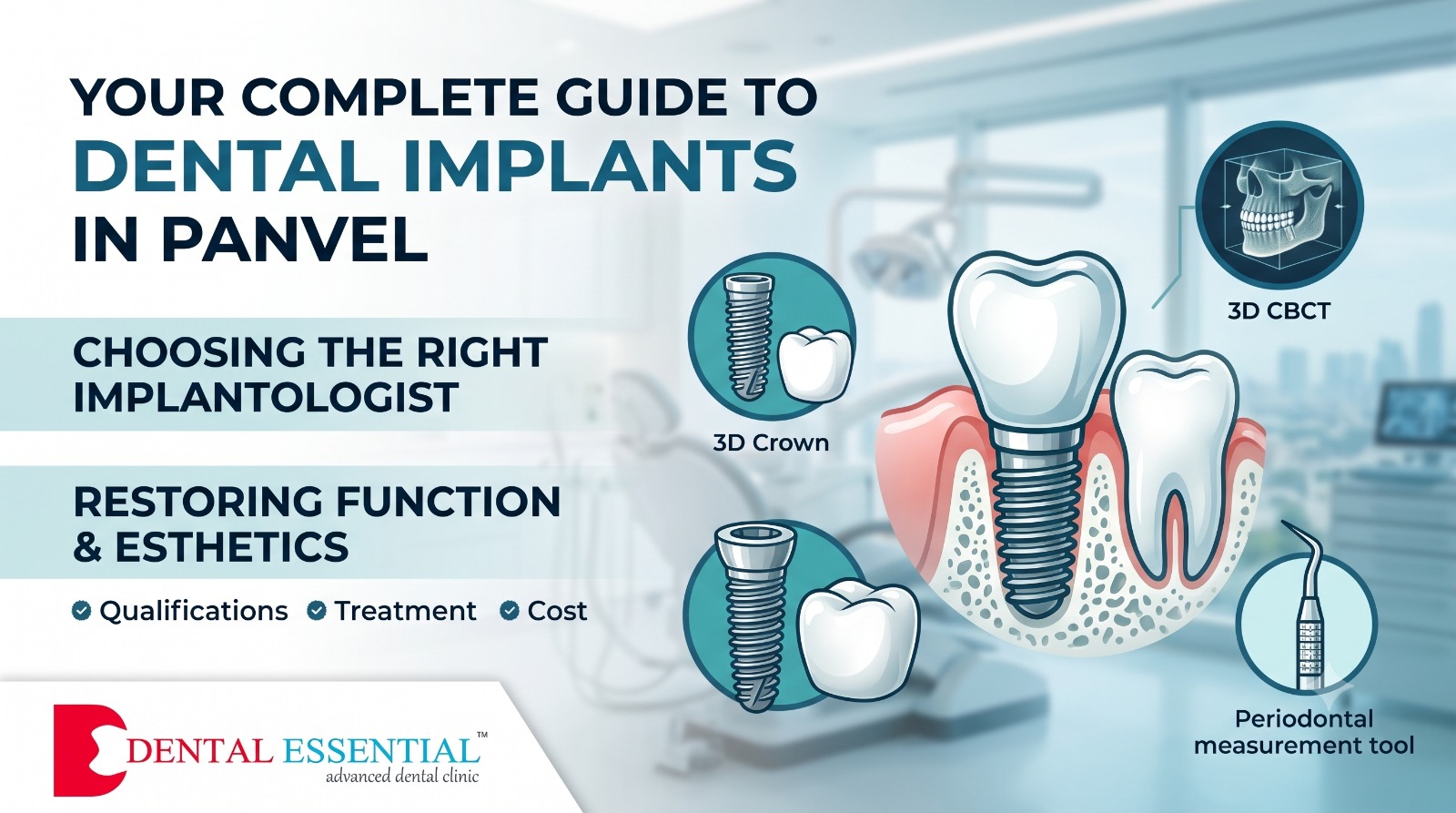
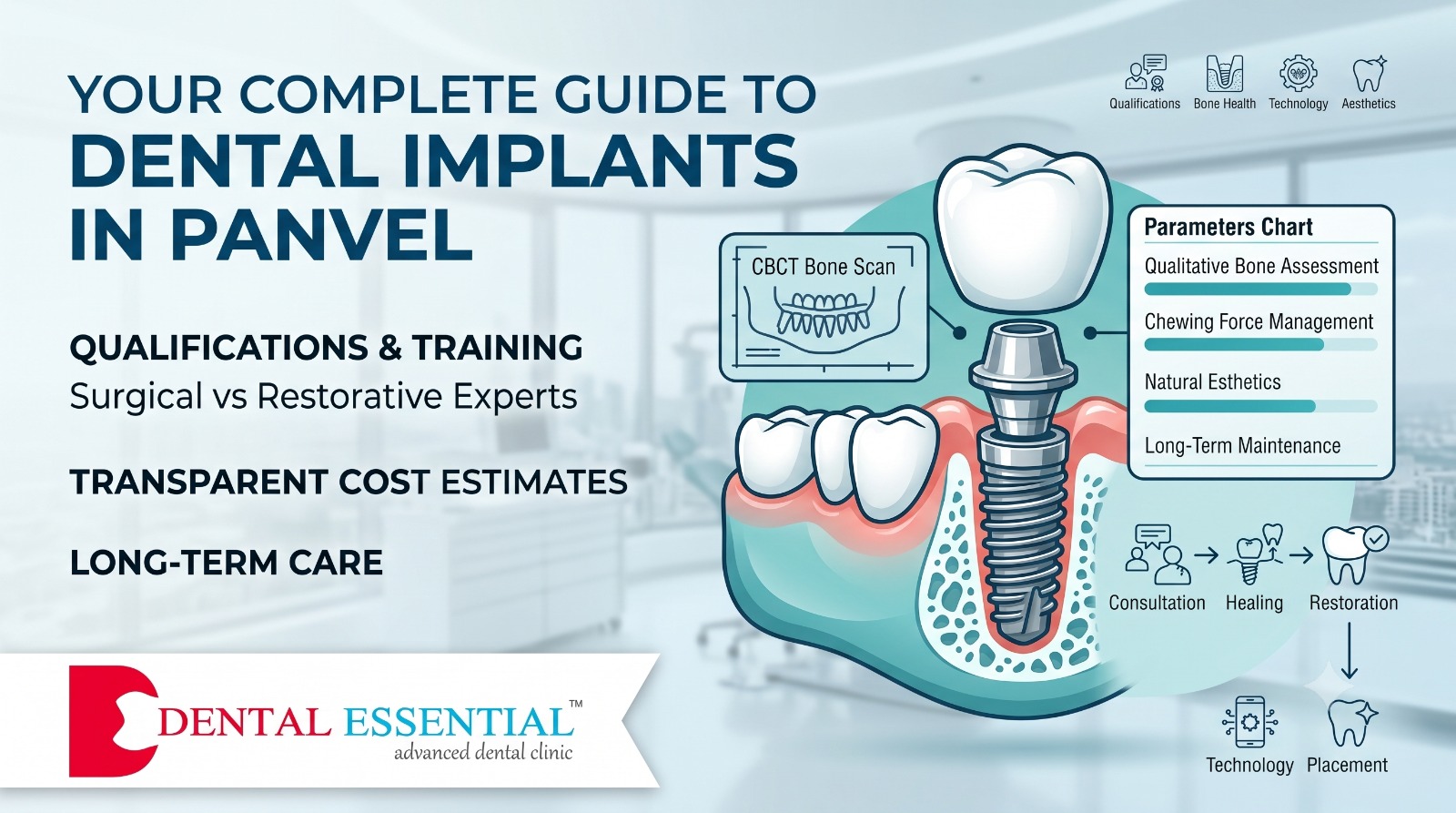
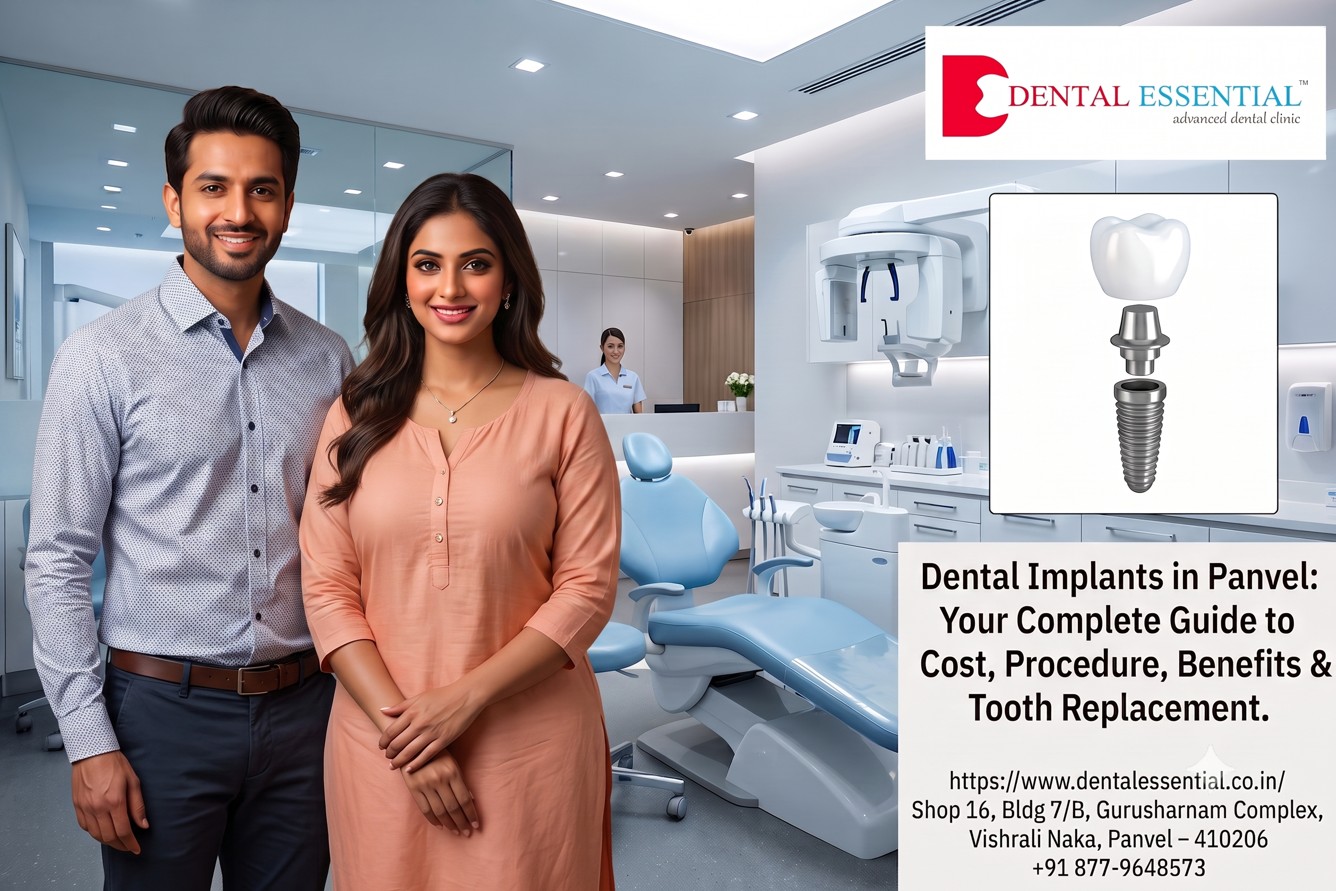
A complete dental implant restoration generally consists of three components:
1. Implant Fixture — The titanium implant is surgically inserted into the jawbone where it functions as the new tooth root.
2. Abutment — This small connector attaches to the implant fixture and supports the final restoration.
3. Dental Crown — A custom-made ceramic or porcelain crown is placed over the abutment, restoring the appearance, strength and function of the missing tooth.
Together, these components provide a durable and aesthetically pleasing solution that can last for many years with proper care.
Why Are Dental Implants Becoming Increasingly Popular in India?
With growing awareness of oral health and advances in dental technology, dental implants have become the gold standard for replacing missing teeth.
Patients today prefer implants because they provide a permanent solution instead of temporary alternatives like removable dentures. Some of the main reasons for their popularity include:
Why Replacing Missing Teeth Is Important
Many people believe losing a single tooth is only a cosmetic concern. In reality, untreated tooth loss can have significant long-term consequences. A missing tooth can cause:
Dental implants help prevent many of these complications by replacing both the visible tooth and its root.
Common Reasons People Need Dental Implants
Types of Dental Implants Available
✦Single Tooth Dental Implant
A single dental implant replaces one missing tooth without affecting adjacent healthy teeth. This option is ideal because it preserves surrounding tooth structure while providing excellent strength and aesthetics.
✦Multiple Dental Implants
When several teeth are missing, multiple implants can support individual crowns or implant-supported bridges, providing greater stability and improved chewing compared to traditional bridges.
✦Implant-Supported Bridge
Instead of replacing every missing tooth with an individual implant, strategically placed implants can support a bridge that replaces multiple adjacent teeth — requiring fewer implants while providing excellent stability.
✦Full Mouth Dental Implants
Patients who have lost most or all of their teeth may benefit from full-mouth implant rehabilitation. Modern implant-supported fixed prostheses provide significantly greater comfort than conventional removable dentures.
✦Immediate Dental Implants
In carefully selected cases, implants may be placed immediately after tooth extraction, reducing treatment time while preserving gum and bone architecture. Not every patient is suitable and careful clinical evaluation is necessary.
Advantages of Dental Implants Over Traditional Tooth Replacement
Step-by-Step Dental Implant Procedure
✦Step 1: Comprehensive Dental Consultation
Every successful implant begins with a detailed examination. The dentist evaluates number of missing teeth, gum health, remaining natural teeth, bite alignment, bone quality, medical history and lifestyle habits.
✦Step 2: Digital X-rays and 3D Diagnostic Imaging
Accurate diagnosis is essential. Your dentist may recommend Digital Dental X-rays, OPG (Orthopantomogram) and CBCT (Cone Beam Computed Tomography) Scan to precisely evaluate bone height, width, density and the position of nearby nerves.
✦Step 3: Personalized Treatment Planning
Your treatment plan is tailored depending on the number of missing teeth, available jawbone, cosmetic expectations, overall oral health and your long-term goals.
✦Step 4: Tooth Extraction (If Required)
If a damaged or infected tooth cannot be saved, it is gently extracted, the area is cleaned thoroughly and implant placement timing is decided based on your clinical situation.
✦Step 5: Bone Grafting (When Necessary)
If there is insufficient bone to support an implant, bone grafting may be recommended to increase bone volume, improve implant stability and preserve facial structure.
✦Step 6: Dental Implant Placement
The implant fixture is placed into the jawbone under local anaesthesia. A precise opening is created in the bone, the titanium implant is positioned accurately and the area is closed to allow healing. Most single implant procedures take 30 to 90 minutes.
✦Step 7: Healing and Osseointegration
Following implant placement, the jawbone gradually bonds with the implant surface. This process — called osseointegration — typically takes 3 to 6 months and creates an exceptionally strong bond.
✦Step 8: Abutment Placement
Once healing is complete, an abutment is attached to the implant, serving as the connector between the implant and the final crown.
✦Step 9: Final Crown Placement
A custom-made dental crown is designed to match adjacent teeth, restore chewing function and blend naturally with your smile. Once placed, the implant functions much like a natural tooth.
Recovery After Dental Implant Surgery
Foods to eat during healing: Yogurt, smoothies, mashed potatoes, rice, khichdi, dal, scrambled eggs, soft fruits, soups.
Avoid: Hard foods, sticky foods, extremely hot beverages, tobacco, alcohol during initial healing.
Dental Implants vs Dentures vs Dental Bridges
Dental Implants — Excellent stability | Highly natural appearance | Excellent chewing | Preserves bone | Long-term | No adjacent tooth preparation | Not removable
Dentures — Moderate stability | Good appearance | Moderate chewing | No bone preservation | Requires replacement | Removable
Dental Bridges — Good stability | Natural appearance | Good chewing | Limited bone preservation | Moderate to long-term | Requires adjacent tooth preparation | Not removable
Dental implants are often preferred because they preserve jawbone health and do not require support from neighbouring teeth.
Dental Implant Success Rate
Dental implants are among the most successful procedures in modern dentistry, with research consistently reporting success rates of over 95% in suitable candidates when proper treatment planning, oral hygiene and regular dental follow-up are maintained.
Caring for Your Dental Implants
Why Choose Dental Essential for Dental Implants in Panvel?
Choosing the right dental clinic is one of the most important decisions when considering dental implant treatment. Dental implants require careful diagnosis, meticulous planning, precise surgical placement and long-term follow-up.
At Dental Essential, we are committed to providing patient-focused implant dentistry using modern techniques, high-quality materials and personalized treatment plans. Our goal is not only to replace missing teeth but also to restore your confidence, oral function and overall quality of life.
Treatment planning at Dental Essential may include digital dental X-rays, OPG, CBCT 3D imaging (when clinically indicated), precision implant placement and high-quality restorative materials.
Serving Patients Across Panvel and Nearby Areas
Dental Essential proudly welcomes patients from:
Frequently Asked Questions
1. What are dental implants?
Dental implants are titanium or biocompatible artificial tooth roots placed into the jawbone to support crowns, bridges or implant-supported dentures.
2. Are dental implants permanent?
Dental implants are designed as a long-term tooth replacement solution. With proper oral hygiene and routine dental care, they can remain functional for many years.
3. How successful are dental implants?
Dental implants have a high long-term success rate when placed in suitable candidates and maintained with good oral hygiene and regular professional care.
4. Is implant surgery painful?
Most patients experience minimal discomfort because local anaesthesia is used during the procedure. Mild soreness after surgery is usually temporary.
5. How long does treatment take?
Treatment duration varies depending on healing and whether additional procedures such as bone grafting are required. Your dentist will provide a personalized timeline after evaluation.
6. Can anyone get dental implants?
Many adults are suitable candidates, but eligibility depends on factors such as gum health, bone quality and overall medical condition.
7. What happens if I don't replace a missing tooth?
Untreated tooth loss may lead to jawbone shrinkage, shifting of adjacent teeth, bite changes and difficulty chewing.
8. How should I care for my implants?
Brush twice daily, floss regularly, attend routine dental check-ups and follow your dentist's maintenance recommendations.
9. Can smokers receive dental implants?
Smoking may reduce healing and increase the risk of implant complications. Your dentist will discuss your individual situation and ways to improve treatment success.
10. Are dental implants better than dentures?
Dental implants offer greater stability, improved chewing efficiency and better preservation of jawbone compared with conventional removable dentures.
11. Will people know I have dental implants?
Properly designed implant restorations closely resemble natural teeth in colour, shape and appearance, making them difficult to distinguish from natural teeth.
12. Can implants replace multiple missing teeth?
Yes. Dental implants can support single crowns, bridges or full-mouth restorations depending on the number of missing teeth.
13. Is age a barrier to implant treatment?
Age alone is not usually a limiting factor. Overall oral health, bone quality and medical fitness are generally more important than chronological age.
14. Why choose Dental Essential for dental implants in Panvel?
Dental Essential combines experienced clinical care, modern diagnostic technology, personalized treatment planning and patient-centred service to help restore healthy, confident smiles.
Book Your Dental Implant Consultation Today
Missing teeth don't have to affect your confidence, comfort or quality of life. Whether you need to replace a single tooth or are considering full-mouth rehabilitation, our experienced team will guide you through every stage of your treatment with personalized care and clear communication.
📍 Shop 16, Bldg 7/B, Gurusharnam Complex, Vishrali Naka, Panvel – 410206
Book your consultation today to learn how dental implants can restore your smile and improve your oral health.
Ready for a Healthier, Straighter Smile?
Consult with expert dentists at Dental Essential Clinic in Panvel. Get personalized treatment plans & affordable care.
Share this article