



Clear Aligners in Panvel: A Complete Guide to Straighter Teeth Without Metal Braces
Do you want straighter teeth but feel uncomfortable about wearing visible metal braces?
You are not alone.
Many adults and teenagers postpone orthodontic treatment because they are concerned about how braces may look during office meetings, college, photographs, weddings, interviews or social occasions. Clear aligners offer a discreet teeth-straightening option without metal brackets and wires. These transparent, removable dental trays are custom-designed to move your teeth gradually into better alignment. Because they can be removed for eating, brushing and flossing, clear aligners have become a popular choice for people who want an orthodontic treatment that fits more easily into everyday life.
For patients searching for clear aligners in Panvel, this guide explains:
Quick Answer: What Are Clear Aligners?
Clear aligners are a series of custom-made, transparent orthodontic trays that apply controlled pressure to move teeth gradually.
Each tray represents a planned stage of treatment. Depending on the system and the dentist’s instructions, a patient generally changes to the next set after approximately one or two weeks.
Aligners are normally worn for around 20–22 hours each day and removed for eating, drinking anything except plain water, brushing and flossing. The American Association of Orthodontists notes that individual treatment time and the number of aligners required depend on the patient’s orthodontic condition and the tooth movements needed.
Clear Aligners, Invisible Braces and Invisalign: Are They the Same?
The terms are often used interchangeably, but there is a difference:
The most important factor is not simply the brand name printed on the aligner box. A successful outcome depends heavily on proper diagnosis, treatment planning, case selection, patient cooperation and clinical monitoring.
A premium aligner brand cannot compensate for an incomplete dental examination or an unsuitable treatment plan.
Why Clear Aligners Are Becoming Popular in Panvel
Panvel has developed into an increasingly urban part of the Mumbai Metropolitan Region. The Panvel Municipal Corporation covers Panvel and several surrounding areas, including New Panvel, Kamothe, Kalamboli, Kharghar, Taloja and other nearby localities.
For people balancing commuting, business, college, family commitments and social events, clear aligners may offer practical lifestyle benefits.
✦Discreet During Work and Social Events
Clear trays are less noticeable than conventional metal brackets and wires. This can appeal to working professionals, customer-facing employees, business owners, college students and people preparing for weddings or important events.
✦Removable for Meals
Panvel residents do not need to give up their preferred home-cooked meals or festive foods solely because of aligner treatment. The trays are removed before eating and placed back after cleaning the teeth.
Patients must still remain disciplined. Frequently removing the trays for tea, snacks or long meals can reduce daily wear time and interfere with progress.
✦Easier Oral Hygiene
Because the trays are removable, patients can brush and floss without navigating around brackets and wires. Research and professional guidance suggest that clear aligners may make oral-hygiene maintenance easier than fixed appliances, although poor cleaning can still contribute to plaque, white spots, tooth decay or gum problems.
✦Digital Treatment Planning
Modern clear-aligner treatment commonly begins with dental records, photographs, X-rays where clinically needed and either a digital intraoral scan or dental impressions.
The digital model can be used to plan staged tooth movements and create a simulation of the expected treatment direction. A simulation is a planning and communication tool, however—not a guaranteed promise that every tooth will move exactly as displayed.
How Do Clear Aligners Work?
Clear aligners move teeth by applying gentle, controlled forces.
Instead of tightening a wire, the dentist provides a sequence of trays. Each aligner is shaped slightly differently from the previous one. When the tray fits over the teeth, its shape applies pressure that encourages selected teeth to move toward the planned position.
Treatment normally follows these stages.
✦Step 1: Dental and Orthodontic Assessment
The dentist examines:
A dental cleaning, filling, gum treatment or other necessary care may need to be completed before the final aligner scan.
✦Step 2: Photographs, Scan and Diagnostic Records
Digital scans or impressions capture the shape and position of the teeth.
Depending on the case, the dentist may also require facial photographs, intraoral photographs and dental X-rays. These records help assess not only the visible crowns but also the roots, supporting bone and overall bite.
A scan alone is not a complete orthodontic diagnosis.
✦Step 3: Digital Treatment Planning
Specialized software is used to map the intended tooth movements.
The dentist reviews the proposed plan, including:
✦Step 4: Aligner Fabrication and Fitting
The customized aligners are manufactured according to the approved treatment plan.
During the fitting appointment, the dentist checks whether the trays seat correctly and explains how to:
✦Step 5: Wearing Each Aligner
Most patients are instructed to wear their aligners for approximately 20–22 hours per day.
They should usually be removed only for:
Your dentist will decide when to change to the next set. Do not switch aligners early simply because the current tray feels comfortable.
✦Step 6: Monitoring and Refinements
Follow-up appointments allow the dentist to confirm that the teeth are tracking according to the plan.
Sometimes actual tooth movement differs from the digital plan. In such cases, the dentist may take another scan and order refinement aligners.
Refinements do not automatically mean the treatment failed. They are a normal part of many cases and allow the treatment plan to be adjusted based on the patient’s real progress.
✦Step 7: Retainers
After the active aligner series is complete, retainers are required to help maintain the corrected tooth positions.
Teeth can shift after any orthodontic treatment, including braces and aligners. Professional guidance and recent clinical consensus both emphasize the importance of retention and follow-up after aligner treatment.
Which Dental Problems Can Clear Aligners Treat?
Depending on severity and the patient’s jaw relationship, clear aligners may be used for:
✦Crowded Teeth
Crowding occurs when there is insufficient room for teeth to align normally. Teeth may overlap, rotate or erupt out of position.
Mild to moderate crowding is among the most commonly treated clear-aligner concerns.
✦Gaps Between Teeth
Clear aligners may close selected spaces between teeth. The cause of the gaps must also be evaluated because spacing can sometimes be connected to missing teeth, tooth size, gum conditions or oral habits.
✦Crooked or Rotated Teeth
Aligners may correct many tooth rotations, although rounded teeth and more difficult rotations may require attachments, refinements or a different orthodontic approach.
✦Overbite or Deep Bite
An overbite describes the vertical overlap of the upper front teeth over the lower front teeth. Some dental overbites can be improved with aligners, while skeletal or severe cases may require additional treatment.
✦Crossbite
A crossbite occurs when one or more upper teeth bite inside the lower teeth. The treatment approach depends on whether the problem is dental, skeletal or a combination of both.
✦Open Bite
An open bite occurs when certain upper and lower teeth do not meet while the mouth is closed. Some cases may respond to aligners, attachments, elastics and habit correction.
✦Underbite
An underbite may involve the position of the teeth, the jaws or both. Minor dental underbites may be treated orthodontically, but major jaw discrepancies can require more complex care.
✦Relapse After Previous Braces
People who previously wore braces but stopped using their retainers may notice minor crowding or gaps returning. Depending on the condition, a shorter clear-aligner plan may correct the relapse.
Who Is a Good Candidate for Clear Aligners?
You may be a suitable candidate when:
The British Orthodontic Society explains that aligners are commonly used for mild-to-moderate irregularity, mild spacing and selected non-extraction cases. More severe crowding, extraction treatment, complex tooth movements and underlying jaw discrepancies may require additional techniques or fixed braces.
Modern clear aligners can manage more complex conditions than earlier systems, but treatment difficulty varies significantly. Recent expert consensus stresses the importance of grading case difficulty, choosing suitable cases and monitoring treatment clinically.
When Might Clear Aligners Not Be the Best Option?
Aligners may not be the first recommendation when:
In some situations, a combination of clear aligners, attachments, elastics, braces or other orthodontic appliances may be recommended.
What Are Aligner Attachments?
Attachments are small, tooth-coloured shapes bonded temporarily to selected teeth.
Although patients often imagine that clear-aligner treatment involves only smooth plastic trays, attachments are common. They help the aligner grip the tooth and apply force in a more controlled direction.
Attachments may be needed for:
They can make the aligners slightly more noticeable, but they often improve the dentist’s ability to perform specific tooth movements.
What Is Interproximal Reduction?
Interproximal reduction, commonly called IPR, is the controlled removal of a very small amount of enamel between selected teeth.
It may be recommended to:
IPR must be carefully planned and performed by a dental professional. It should never be attempted at home.
Are Clear Aligners Painful?
Clear aligners should not cause severe pain, but mild pressure or tenderness is common—particularly after switching to a new tray.
This pressure usually indicates that the aligner is applying force to the teeth.
Patients may also initially notice:
Severe pain, gum injury, a tray that will not fit or sudden bite changes should be reported to the treating dentist.
How Long Does Clear-Aligner Treatment Take?
There is no single treatment duration for every patient.
A relatively simple relapse or spacing case may require only a few months. Moderate or complex treatment can take a year or longer.
Treatment time depends on:
Patients should be cautious of advertisements promising an exact result within a fixed number of months before a complete clinical assessment.
Clear Aligners Cost in Panvel
The cost of clear aligners in Panvel depends on the patient’s individual treatment plan rather than the plastic trays alone.
Major Indian providers currently advertise broad aligner ranges of approximately ₹50,000 to ₹2,00,000, depending on case complexity, brand, number of aligners and treatment duration. Some clinic chains advertise narrower ranges of around ₹60,000 to ₹1,50,000. These are market references—not Dental Essential’s confirmed fee.
Your final quotation may depend on:
Questions to Ask Before Accepting a Quotation
Before comparing clear-aligner prices, ask whether the quotation includes:
A low headline price may not represent the full treatment cost.
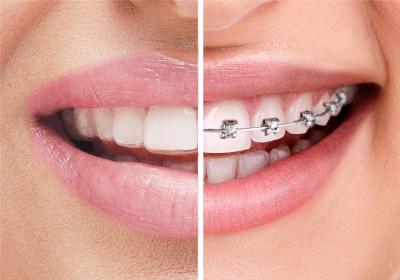
Clear Aligners vs Metal Braces
| Feature | Clear Aligners | Metal Braces |
|---|---|---|
| Appearance | Nearly transparent | Visible brackets and wires |
| Removability | Removable by the patient | Fixed until treatment is completed |
| Eating | Removed before meals | Some hard and sticky foods may need to be avoided |
| Cleaning | Normal brushing and flossing after removal | Extra cleaning around brackets and wires |
| Compliance | Requires disciplined daily wear | Works continuously because it is fixed |
| Complex movements | Can treat many cases, sometimes with auxiliaries | Often provides strong control in complex cases |
| Emergency visits | No broken wires or brackets, but trays can be lost or damaged | Brackets or wires may loosen or break |
| Comfort | Smooth trays; pressure when changing sets | Brackets and wires may irritate cheeks or lips |
| Visibility | Less noticeable | More noticeable |
| Cost | Often higher | Metal braces are frequently more affordable |
| Retainers | Required after treatment | Required after treatment |
Neither option is automatically “better” for everyone. The right choice depends on your bite, complexity of movement, lifestyle, budget, age, oral hygiene and dentist’s clinical assessment.
Clear Aligners vs Ceramic Braces
Ceramic braces use tooth-coloured or clear brackets, making them less noticeable than metal braces. However, they remain fixed to the teeth.
Clear aligners are removable, while ceramic braces work continuously without relying on the patient to remember to wear them.
Ceramic braces may be worth considering when:
Clinic-Supervised Aligners vs At-Home Aligners
At-home aligner companies may advertise convenience and lower prices. However, orthodontic treatment involves moving teeth through bone and changing the bite—not merely improving the appearance of the front teeth.
A clinic-supervised approach allows the dentist to:
Professional orthodontic organizations emphasize the importance of comprehensive assessment, diagnosis and an individualized treatment plan.
Can You Eat Normally with Clear Aligners?
Yes, because the aligners are removed before meals.
However, patients should follow several rules:
Frequent snacking can make it harder to achieve the prescribed daily wear time.
Can You Drink Tea or Coffee with Aligners?
Tea, coffee and other coloured drinks may stain clear aligners. Hot drinks can also distort some aligner materials.
The safer routine is:
Sugary drinks trapped beneath aligners may increase the risk of tooth decay.
How Should You Clean Clear Aligners?
To keep your trays clear and fresh:
A stained aligner is not always a damaged aligner, but persistent odour, cracking or poor fitting should be discussed with the clinic.
Can You Travel While Wearing Aligners?
Clear aligners can be convenient for patients travelling between Panvel, Navi Mumbai, Mumbai or other cities, but preparation matters.
Carry:
Do not switch to the next tray early simply because you will be away from home.
Clear Aligners for Working Professionals
Clear aligners may suit professionals who regularly attend:
The trays are discreet, but they still require responsibility. Repeatedly removing them during the workday can extend treatment.
Clear Aligners for College Students and Teenagers
Teenagers and university students may prefer aligners because they are less noticeable and can be removed for sports, meals and brushing.
However, aligners are only effective when worn consistently.
Parents and patients should consider:
Young patients require a proper clinical assessment rather than treatment based solely on age or appearance.
Planning Aligners Before a Wedding or Major Event
Patients often search for teeth straightening before a wedding, engagement, graduation or professional milestone.
Start with realistic expectations.
The dentist may be able to estimate:
Avoid starting treatment based on a guaranteed “perfect smile” deadline. Biological tooth movement and individual response cannot be rushed safely.
Possible Risks and Limitations
Clear aligners are a clinical treatment and are not risk-free.
Possible concerns include:
Recent expert consensus notes that clear-aligner treatment can be associated with dental and periodontal risks, although oral-hygiene outcomes may be more favourable than with fixed appliances in appropriately managed patients.
Common Clear-Aligner Mistakes
Wearing Them Only at Night
Most standard aligner plans require close to full-time wear. Night-only use is not equivalent unless the treating dentist has prescribed a system specifically designed for that schedule.
Moving to the Next Tray Too Early
An aligner feeling loose does not always mean the teeth are ready for the next stage.
Drinking Tea or Sugary Beverages with Them In
This can stain the trays and trap sugar or acid against the teeth.
Skipping Follow-Up Appointments
Digital planning does not eliminate the need for clinical monitoring.
Losing the Current Tray
Always store the aligners in their case rather than a napkin, pocket or loose bag.
Ignoring Poor Tracking
A visible gap between the tooth and aligner may indicate that the tray is not seating correctly. Stopping After the Last Aligner The final aligner is not a permanent substitute for a properly planned retainer.
Choosing Only by Price
Diagnosis, supervision, refinements and retention are more important than the lowest advertised package.
How to Choose a Clear-Aligner Clinic in Panvel
Before selecting a clinic, consider the following.
Comprehensive Assessment
The dentist should examine your teeth, gums and bite—not merely take a scan.
Clear Explanation of Alternatives
A trustworthy dentist should explain whether clear aligners, metal braces, ceramic braces or a combined approach is more appropriate.
Transparent Treatment Plan
You should understand:
Clinical Monitoring
Ask how frequently progress will be reviewed and what happens if the teeth stop tracking.
Realistic Promises
Be cautious of guaranteed results, instant fixes or claims that every patient can be treated without attachments, refinements or regular reviews.
Convenient Location
For orthodontic treatment, proximity matters because follow-ups may continue for many months.
Patients searching for clear aligners near New Panvel, Old Panvel, Vishrali Naka, Kamothe, Kalamboli, Kharghar, Taloja or surrounding areas may find a Panvel clinic more practical for ongoing monitoring.
Clear Aligners at Dental Essential, Panvel
Dental Essential provides clear-aligner and Invisalign-related consultations at its Panvel dental clinic.
The clinic’s existing treatment information includes:
Dental Essential is led by Dr. Sameer R. Gharat and his dental team. During your consultation, the team can evaluate your teeth alignment, bite, oral health and treatment expectations before recommending a suitable approach.
A consultation is also an opportunity to compare clear aligners with conventional braces rather than assuming aligners are automatically the correct choice. Dental Essential Address 📍 Shop 16, Bldg 7/B, Gurusharnam Complex, Vishrali Naka, Panvel – 410206 📞 +91 877-9646573 Clinic Hours Monday to Saturday:10:00 AM–9:30:00 PM Sunday: Closed Phone 📞 +91 877-9646573
The clinic address, contact number, opening hours and Dr. Sameer R. Gharat’s role are listed on Dental Essential’s official website.
Frequently Asked Questions About Clear Aligners
✦Are clear aligners better than braces?
Clear aligners are not universally better. They are removable, discreet and easier to clean around, but braces may provide more predictable control in certain complex cases. The best option depends on your bite, treatment needs and compliance.
✦Are clear aligners completely invisible?
No. They are transparent and usually less noticeable than braces, but attachments, elastics, saliva or staining can make them visible at close range.
✦How many hours should I wear clear aligners?
Most patients are instructed to wear them for approximately 20–22 hours per day. Follow the exact schedule given by your dentist.
✦How often are aligners changed?
Many plans change trays every one or two weeks. The interval depends on the aligner system, tooth movement, treatment plan and dentist’s instructions.
✦Can clear aligners close gaps?
They can close many mild and moderate spaces. The dentist must first determine why the gap exists and whether aligners are the right treatment.
✦Can aligners fix crowded teeth?
Clear aligners commonly treat mild to moderate crowding. Severe crowding may require IPR, expansion, extraction, braces or a combined plan.
✦Do aligners change your face?
Orthodontic treatment may affect the smile, lip support and dental appearance. Significant changes to jaw structure generally require growth modification or surgical treatment rather than aligners alone.
✦Can I remove aligners for an important meeting?
They can be removed briefly, but frequent removal reduces daily wear time. Most people can speak normally after adapting to the trays.
✦Can I smoke while wearing aligners?
Smoking may stain the trays and affect oral health. Discuss smoking or tobacco use honestly with your dentist.
✦What happens if I lose an aligner?
Contact the clinic rather than automatically skipping to the next tray. You may be instructed to wear the previous set, move forward or order a replacement depending on your progress.
✦Will I need attachments?
Possibly. Attachments help control certain movements and are common in moderate or complex aligner treatment.
✦Are refinements included in the price?
This depends on the clinic and aligner package. Ask before treatment whether refinements are included and whether there is a time or quantity limit.
✦Will I need retainers after clear aligners?
Yes. Retainers are normally required after orthodontic treatment to reduce the risk of teeth shifting.
✦What is the clear-aligner cost in Panvel?
The cost depends on complexity, brand, number of trays, attachments, refinements and retainers. A clinical examination is needed for an accurate quotation.
✦Can teenagers use clear aligners?
Many teenagers can use them, provided their dental development, orthodontic condition and ability to follow the wear schedule make them suitable candidates.
✦Can adults get clear aligners?
Yes. Adults commonly choose aligners for crowding, spacing, bite concerns or relapse after previous braces. Gum and bone health must be evaluated first.
Book a Clear-Aligner Consultation in Panvel
A straighter smile begins with the right diagnosis—not with choosing a brand or ordering trays online.
At Dental Essential, your dentist can assess:
✦Contact Details:
- Address: 📍 Shop 16, Bldg 7/B, Gurusharnam Complex, Vishrali Naka, Panvel – 410206
- Phone: 📞 +91 877-9646573
- Clinic Hours: Monday to Saturday: 10:00 AM – 9:30 PM | Sunday: Closed Book an appointment at Dental Essential, Vishrali Naka, Panvel, to find out whether clear aligners are suitable for your teeth, lifestyle and budget. Call +91 877-9646573 or use the online appointment form to schedule your consultation.
Ready for a Healthier, Straighter Smile?
Consult with expert dentists at Dental Essential Clinic in Panvel. Get personalized treatment plans & affordable care.
Share this article