



Dental Implantologist in Panvel: Qualifications, Treatment, Cost and How to Choose
Losing a tooth can affect more than the appearance of your smile. It may make chewing uncomfortable, change the way you speak and allow neighbouring teeth to shift gradually into the empty space.
Dental implants offer a fixed tooth-replacement option that can restore chewing function, support a natural-looking crown and help maintain the surrounding jawbone. However, implant treatment involves surgery, restorative planning and long-term maintenance. Choosing the right dental implantologist in Panvel is therefore just as important as choosing the implant itself.
An implantologist does much more than place a titanium screw in the jaw. The dentist must evaluate your gums and bone, study your bite, determine the correct implant position, plan the final crown and monitor the implant after treatment.
This complete guide explains:
What Is a Dental Implantologist?
A dental implantologist is a dentist with focused education, clinical training and experience in implant dentistry.
Implant dentistry involves replacing missing tooth roots with implant fixtures placed inside the jawbone. The fixture can then support a dental crown, bridge or implant-supported denture.
An implantologist may participate in every stage of treatment, including:
Dental implants may restore chewing, improve appearance, help preserve the surrounding bone and provide stability without preparing adjacent healthy teeth for a conventional bridge. Implant treatment nevertheless carries surgical and restorative risks, which is why diagnosis and professional supervision are essential.
Is an Implantologist Different From a General Dentist?
Yes, although every implantologist first qualifies as a dentist.
A general dentist normally provides broad oral healthcare such as examinations, cleanings, fillings, root canal treatment, crowns, gum care and preventive dentistry.
An implantologist has additional experience focused on missing-tooth replacement through dental implants. This can include implant surgery, bone assessment, restorative planning, implant-supported crowns, bridges, dentures and the management of more complicated cases.
The difference is not simply the job title. Patients should evaluate the dentist’s:
A dentist may be legally and clinically able to place implants without using “implantologist” as a title. Similarly, seeing “implantologist” on an advertisement does not eliminate the need to verify the dentist’s training and registration.
Is Implantology a Separate Dental Specialty in India?
Patients often assume that every person calling themselves an implantologist holds the same postgraduate qualification. That is not necessarily the case.
Dental implant education in India overlaps several recognised areas of dentistry. Dental Council of India training regulations place oral implantology within departments including Prosthodontics, Oral and Maxillofacial Surgery and Periodontology.
In practical terms, implant treatment may be provided by dentists from backgrounds such as:
This is why patients should look beyond a single title.
Ask what postgraduate qualification the dentist holds, how much implant-specific training they have completed, which parts of the treatment they personally perform and whether other specialists will be involved.
What Is a Prosthodontist and Implantologist?
A prosthodontist is a dentist with postgraduate training in restoring and replacing teeth.
Prosthodontic treatment can include:
Implant treatment should ideally be planned according to the final tooth that needs to be created. The position of the crown, chewing forces, gum appearance and relationship with neighbouring teeth influence where an implant should be placed.
A prosthodontist and implantologist can therefore bring both the surgical implant plan and the final restorative result into the same treatment strategy.
At Dental Essential, Dr. Sameer Ramchandra Gharat is listed as a Prosthodontist and Implantologist with BDS and MDS qualifications in Prosthodontics and Implantology. The clinic states that he has more than 16 years of experience and focuses on implants, crowns, bridges and complete smile rehabilitation.
Implantologist vs Prosthodontist vs Oral Surgeon vs Periodontist
Several dental professionals may contribute to implant treatment. Dental professional Principal area of focus Possible role in implant treatment General dentist
Overall oral healthcare
Initial diagnosis, routine implant cases, restoration or referral
Implantologist
Implant-focused dental care
Case assessment, implant placement, restoration and maintenance
Prosthodontist
Replacement and restoration of teeth
Crown design, bite planning, implant prosthesis and full-mouth rehabilitation
Oral and maxillofacial surgeon
Surgical care of the mouth and jaws
Implant surgery, extraction, bone grafting and complex surgical procedures
Periodontist
Gums and tooth-supporting tissues
Gum treatment, bone management, implant placement and peri-implant care
Complex treatment may require collaboration between more than one professional. Implant planning can involve a prosthodontist, oral surgeon, periodontist, radiologist or other healthcare professional depending on the patient’s condition.
The most suitable professional is not determined by title alone. It depends on the dentist’s qualifications, clinical experience, the complexity of your case and how effectively the surgical and restorative stages are coordinated.
What Does a Dental Implantologist Do?
✦1. Determines Why the Tooth Was Lost
Before replacing a tooth, the implant dentist should identify why it was lost.
Possible causes include:
The original cause can affect implant planning. For example, gum disease must be controlled before implant placement to reduce future complications.
✦2. Reviews Medical History
Your general health can influence healing and implant treatment.
The implantologist may ask about:
Patients should disclose their complete medical history rather than assuming a condition is unimportant.
Well-controlled diabetes does not automatically prevent implant treatment, but poorly controlled diabetes may be associated with increased healing and peri-implant complications.
✦3. Examines the Teeth, Gums and Bite
The dentist evaluates more than the empty space.
A complete assessment may include:
Untreated decay, active gum disease and unstable oral health generally need to be managed before implant treatment begins.
✦4. Uses Diagnostic Imaging When Clinically Necessary
Dental X-rays help an implantologist evaluate bone levels, neighbouring roots and important anatomical structures.
Depending on the case, records may include:
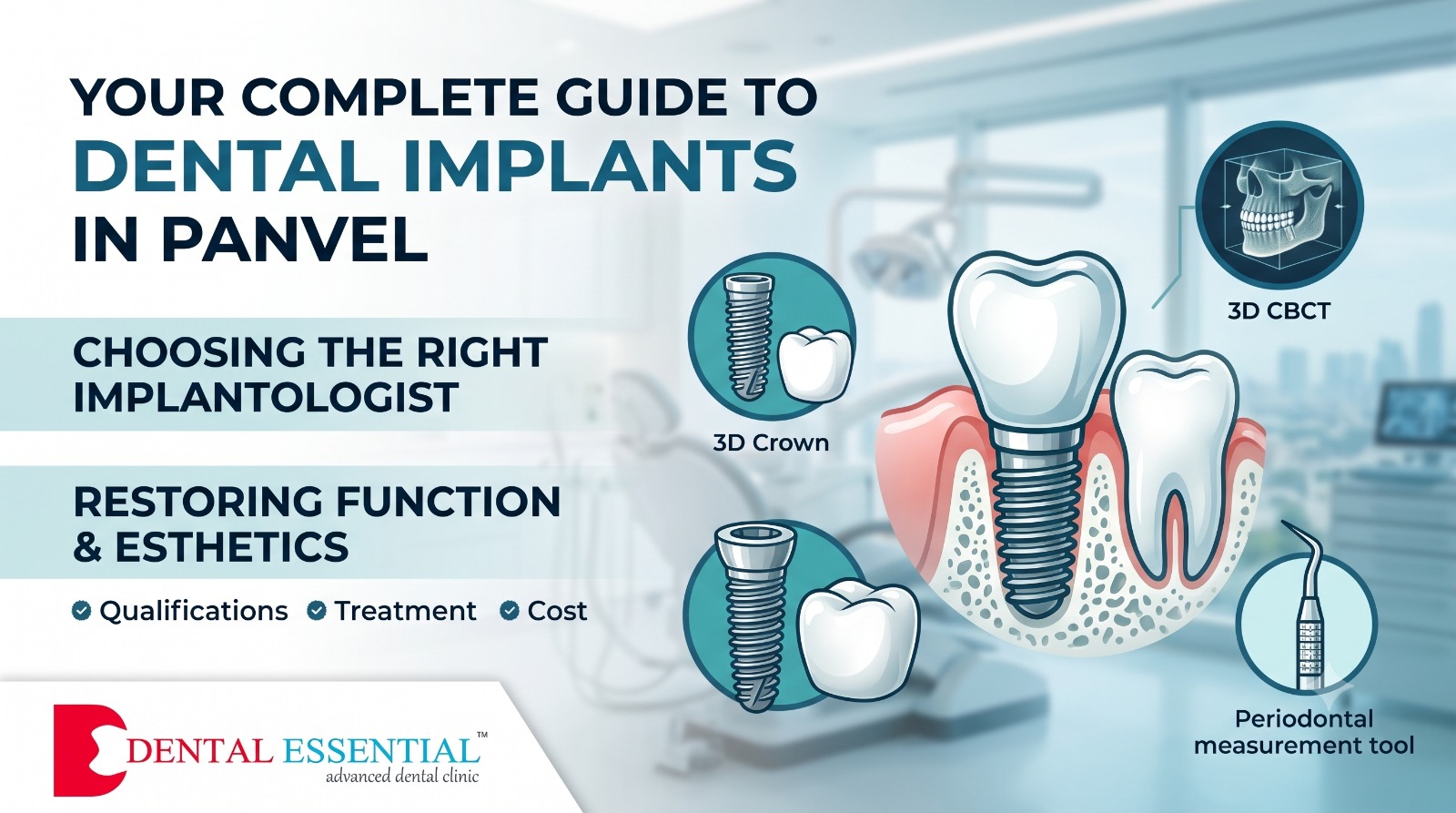
CBCT imaging can provide three-dimensional information about available bone and nearby structures. However, scans should be selected according to clinical need rather than used simply as a marketing feature. Radiographic examinations are intended to support diagnosis, prognosis and treatment-complexity assessment.
✦5. Plans the Final Tooth Before Placing the Implant
An implant must be positioned so that the final crown or bridge is:
This is called prosthetically driven implant planning.
Placing an implant wherever bone happens to be available may create problems with crown shape, appearance, hygiene or chewing forces. The ideal plan considers both the bone and the final replacement tooth.
✦6. Places the Implant
The implant fixture is normally placed into the jawbone under local anaesthesia.
The procedure can involve:
The exact procedure depends on bone quality, implant location, infection history, the number of implants and whether grafting is required.
✦7. Monitors Osseointegration** Osseointegration** is the biological process through which the bone heals around and connects with the implant surface.
Healing time varies between patients. Some implants may support a temporary tooth immediately, while others need an unloaded healing period.
An ethical implantologist will not promise same-day fixed teeth to every patient. Immediate placement and immediate loading are case-dependent clinical decisions.
✦8. Restores the Implant
Once the implant is ready, it can support:
The final restoration must fit accurately, look natural and distribute chewing forces appropriately.
✦9. Provides Long-Term Maintenance
Implants cannot develop tooth decay, but the gums and bone around them can become inflamed or infected.
Long-term maintenance may include:
Dental implants are not a “place it and forget it” treatment.
When Should You Consult a Dental Implantologist?
Consider consulting a dental implant specialist in Panvel when you:
You do not need to wait until all your teeth are missing. Early consultation can allow the dentist to evaluate whether a damaged tooth can still be saved and, when extraction is unavoidable, how the site should be managed for future replacement.
Who Is a Suitable Candidate for Dental Implants?
Many adults with missing teeth can be considered for implant treatment, but suitability must be determined individually.
A favourable candidate generally has:
Age alone is usually less important than medical health, gum condition, bone quality and the ability to maintain the implant.
Who May Need Additional Treatment Before Implants?
Implant surgery may be postponed or modified when a patient has:
Smoking is associated with a higher risk of implant failure and complications. A systematic review and meta-analysis found a significantly greater failure risk among smokers than non-smokers.
This does not mean that every smoker will experience implant failure. It means tobacco use should be discussed honestly during risk assessment.
Do You Need a Bone Graft Before a Dental Implant?
Not every patient needs bone grafting.
A bone graft may be considered when:
Possible procedures include:
The need for grafting should be based on clinical examination, imaging and the final restorative plan.
Types of Dental Implant Treatment
✦Single-Tooth Dental Implant
A single implant can replace one missing tooth without reducing adjacent teeth to support a conventional bridge.
It generally includes:
✦Multiple-Tooth Implant Bridge
When several adjacent teeth are missing, two or more implants may support a bridge. It is not always necessary to place one implant for every missing tooth.
✦Implant-Supported Denture
Implants can help stabilize a removable denture, reducing movement while speaking and chewing.
Depending on the plan, the denture may remain removable for cleaning while attaching securely to implant components.
✦Full-Arch Fixed Implant Teeth
Patients missing most or all teeth may be evaluated for a fixed full-arch restoration supported by multiple implants.
Terms such as All-on-4, All-on-6 and full-mouth dental implants describe different treatment concepts. The number and position of implants must be determined for the individual patient rather than selected from an advertisement.
✦Immediate Implant Placement
An implant may sometimes be placed during the same appointment as tooth extraction.
Immediate placement is not suitable for every socket. Infection, bone condition, gum anatomy and the ability to obtain implant stability must be evaluated.
✦Immediate-Loading Implant
Immediate loading involves attaching a temporary replacement tooth soon after implant placement.
The temporary tooth may need to remain out of heavy contact while healing. A same-day tooth does not mean that biological healing is complete in one day.
Dental Implant Treatment Process
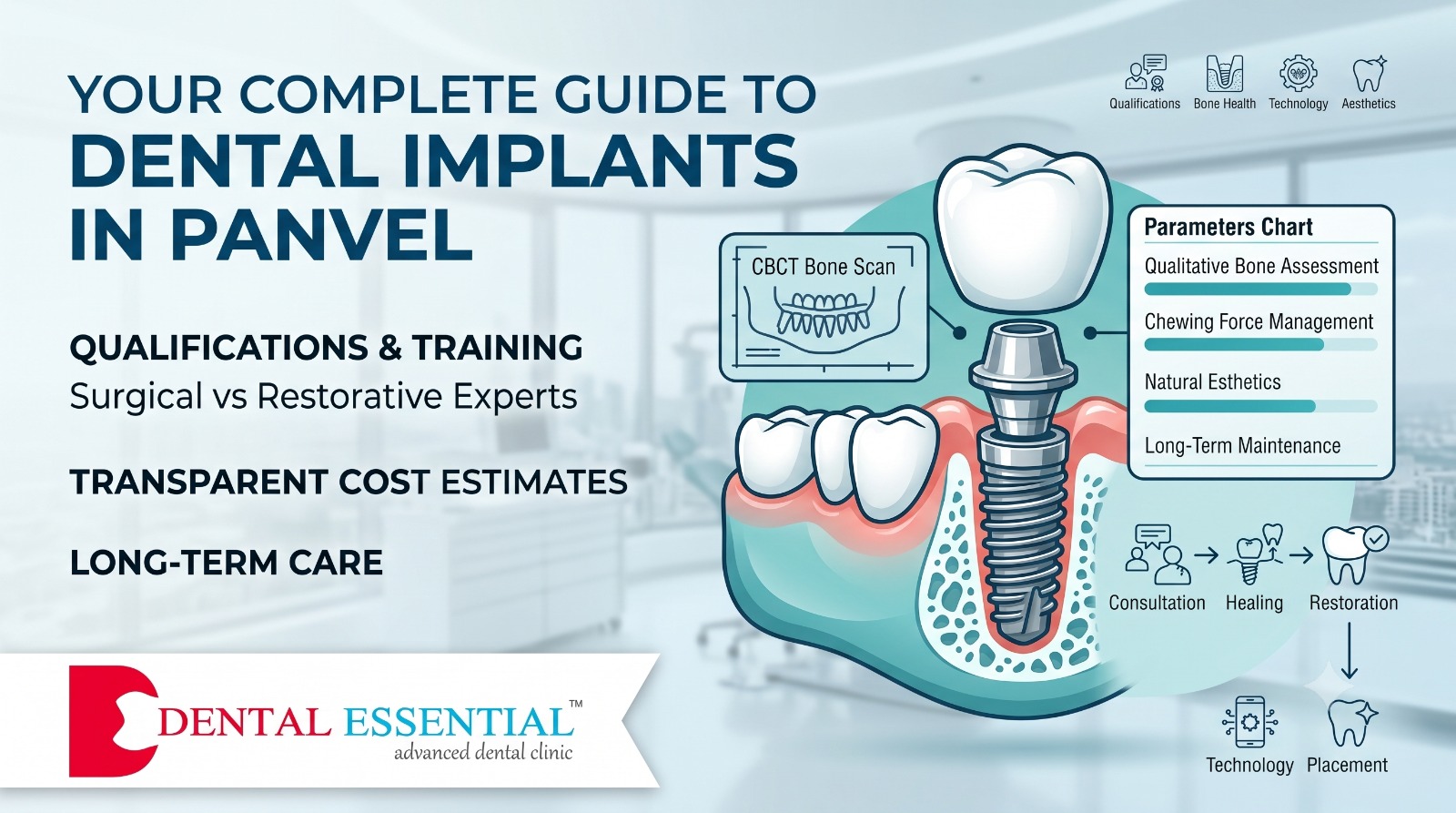
✦Step 1: Consultation
The implantologist discusses your concerns, medical history, missing teeth, expectations and replacement options.
✦Step 2: Clinical Examination
Your teeth, gums, bite and available space are evaluated.
✦Step 3: Imaging and Records
X-rays, photographs, scans or impressions may be taken according to your case.
✦Step 4: Treatment-Option Discussion
The dentist should explain:
✦Step 5: Oral-Health Preparation
Cleaning, gum treatment, fillings or infection control may be required first.
✦Step 6: Implant Surgery
The implant is placed under local anaesthesia according to the planned position.
✦Step 7: Healing
The gum and bone heal around the implant. Follow-up appointments are used to review progress.
✦Step 8: Crown or Prosthesis
After appropriate healing and assessment, the implant is restored with a crown, bridge or denture.
✦Step 9: Maintenance
Regular examinations and professional cleaning help protect the surrounding gums, bone and prosthetic components.
Is Dental Implant Surgery Painful?
Local anaesthesia is used during implant placement to control pain.
After the procedure, patients may experience:
The degree of discomfort depends on the number of implants, surgical complexity, grafting and individual healing.
Severe pain, persistent bleeding, fever, worsening swelling, discharge, numbness or implant mobility should be reported to the dentist promptly.
Dental implant surgery can involve risks such as infection, injury to nearby teeth or tissues, nerve-related symptoms, sinus complications, bone injury, component loosening or implant failure.
No responsible dentist should describe implants as completely risk-free.
How Long Does Dental Implant Treatment Take?
The timeline varies considerably.
A straightforward case may progress faster than a case requiring:
Conventional implant healing is often measured in months rather than days. Some patients may receive a temporary tooth earlier, but the definitive restoration is planned according to implant stability, tissue health and the dentist’s clinical assessment.
Dental Implant Cost in Panvel
The cost of dental implants in Panvel depends on the complete treatment plan, not only the metal implant fixture.
Dental Essential’s dental implant treatment starts from approximately ₹20,000 per implant, depending on implant type and case complexity. A personalized estimate is provided after consultation.
The total dental implant cost may be affected by:
Questions to Ask About Implant Pricing
Before comparing quotations, ask whether the price includes:
One clinic may advertise only the implant fixture while another quotation may include the fixture, abutment and crown. Comparing headline prices without comparing inclusions can be misleading.
Dental Implant vs Bridge vs Denture** Treatment Dental implant Dental bridge Removable denture** Support
Jawbone
Neighbouring teeth
Gums and remaining oral structures
Removable
Usually no
No
Yes
Adjacent teeth prepared
Usually not
Commonly required
No
Jawbone stimulation
Helps preserve bone around implant
Does not replace root
Does not replace root
Cleaning
Requires implant-specific hygiene
Requires cleaning under bridge
Removed for cleaning
Treatment time
Often several stages
Usually shorter
Usually shorter
Surgery
Required
Usually not
Usually not
Initial cost
Often higher
Moderate
Generally lower
Suitability
Depends on bone and health
Depends on supporting teeth
Suitable for many patterns of tooth loss
The best option depends on your oral condition, budget, health, preferences and long-term goals.
A good implantologist should explain alternatives rather than pressuring every patient to select an implant.
How to Choose the Best Implantologist in Panvel
“Best implantologist” is a highly searched phrase, but no single dentist is automatically best for every patient.
Use the following checklist.
✦Verify Qualifications and Registration
Check:
The National Dental Commission maintains access to Indian dentist and institution information through its official portal.
✦Ask About Experience With Your Type of Case
Placing a straightforward back-tooth implant is different from managing:
Ask for experience relevant to your condition rather than only asking how many years the dentist has practised.
✦Assess the Treatment-Planning Process
A thorough consultation should not consist only of looking inside the mouth and quoting a price.
The dentist should discuss:
✦Ask Who Performs Each Stage
Find out who will:
Team treatment can be excellent, but responsibilities should be clear.
✦Review Sterilisation and Safety
Implant surgery should be performed with appropriate infection-control and sterilisation protocols.
✦Evaluate Communication
The dentist should explain difficult information in understandable language and allow you to ask questions.
Pressure-based selling, fear-based claims and unexplained treatment packages are warning signs.
✦Look for Transparent Pricing
Ask for a written treatment plan explaining inclusions, exclusions and possible additional costs.
✦Prioritise Follow-Up Access
Choosing a local implantologist in Panvel can make postoperative reviews, crown adjustments and maintenance appointments more convenient.
Implant treatment may require multiple visits. Convenience matters because missing follow-ups can affect the treatment process.
Red Flags When Choosing an Implant Dentist
Be cautious when a clinic:
A confident dentist should still be honest about limitations.
Why Patients in Panvel May Prefer a Local Implantologist
Implant treatment often involves more than one appointment.
A nearby clinic can make it easier to attend:
Dental Essential welcomes patients from Panvel and nearby areas such as New Panvel, Kamothe, Kharghar, Kalamboli, Taloja, Khanda Colony, Roadpali, Ulwe, Uran, Rasayani and surrounding Navi Mumbai localities.
Dental Implantologist at Dental Essential, Panvel
Dental Essential provides dental implant consultations and missing-tooth replacement treatment at Vishrali Naka, Panvel.
The implant services described by the clinic include:
The clinic is led by Dr. Sameer Ramchandra Gharat, a Prosthodontist and Implantologist with BDS and MDS qualifications in Prosthodontics and Implantology. Dental Essential states that he has more than 16 years of clinical experience and is a member of the Indian Dental Association and Indian Prosthodontic Society.
Every implant case requires individual evaluation. The recommended treatment may differ depending on bone, gum health, medical history, bite, number of missing teeth and budget. Dental Essential Address : Shop 16, Bldg 7/B, Gurusharnam Complex, Vishrali Naka, Panvel – 410206 Phone: +91 877-9646573 Clinic hours:Monday to Saturday: 10:00 AM–9:30 PM Sunday: Closed
Frequently Asked Questions** What is a dental implantologist?** A dental implantologist is a dentist with focused training and clinical experience in planning, placing, restoring or maintaining dental implants.** What is an implant dentist called?** The dentist may be described as an implant dentist or implantologist. Depending on postgraduate training, they may also be a prosthodontist, oral and maxillofacial surgeon or periodontist.** Is an implantologist the same as a dentist?** An implantologist is a dentist, but not every dentist has the same level of implant-focused training or experience.** Which doctor is best for dental implants?** The appropriate doctor depends on your case. Evaluate recognised qualifications, registration, implant training, relevant experience, restorative planning and access to long-term follow-up.** Is a prosthodontist good for dental implants?** Prosthodontists receive postgraduate training in replacing teeth, designing crowns and bridges, managing bites and planning complex rehabilitation. A prosthodontist with implant training can be well suited to implant restoration and treatment planning.** Can a general dentist place implants?** A general dentist may provide implant treatment when appropriately trained and experienced. Patients should verify qualifications, clinical experience and the complexity of procedures offered.** How much does a dental implant cost in** **Panvel****?** Dental Essential states that implant treatment starts from approximately ₹20,000 per implant. The complete cost depends on the fixture, abutment, crown, imaging, grafting, complexity and number of implants required.** Are dental implants permanent?** Implants are intended as a long-term tooth-replacement solution, but no implant can be guaranteed for life. Longevity depends on health, implant position, bite, oral hygiene, smoking, maintenance and the condition of surrounding bone and gums.** Is dental implant surgery painful?** Local anaesthesia controls pain during the procedure. Mild or moderate postoperative soreness and swelling can occur. More complex surgery may involve a longer recovery.** How long does a dental implant take?** Treatment can take several months when healing is required. Immediate-placement or immediate-loading options may be available in selected cases, but they are not appropriate for every patient.** Can dental implants be completed in one day?** Some patients may receive an implant and temporary tooth on the same day. This does not mean that the bone has completed healing or that every patient qualifies for same-day treatment.** Can senior citizens receive implants?** Many older adults can receive implants. Medical fitness, gum health, bone condition, medicines and oral hygiene are usually more important than age alone.** Can diabetic patients receive dental implants?** Some patients with well-controlled diabetes may be suitable. Poorly controlled diabetes can increase treatment risks, so medical coordination and careful monitoring may be necessary.** Can smokers get dental implants?** Implants may be possible, but smoking increases failure and complication risks. Patients should discuss tobacco use honestly and follow cessation advice from their healthcare professionals.** What happens when there is not enough bone?** The implantologist may discuss bone grafting, sinus augmentation, alternative implant positions, a different prosthetic design or non-implant options.** How many teeth can one implant replace?** One implant commonly supports one crown, but multiple implants can support a bridge or full-arch prosthesis. One implant should not automatically be assumed for every missing tooth.** Do implants require special cleaning?** Yes. Daily brushing, cleaning around the implant, professional maintenance and periodic reviews are needed to protect the surrounding tissues.** How do I verify a dentist’s qualifications?** Ask for the dentist’s degree and registration details and verify registration through the relevant State Dental Council or National Dental Commission resources.
Book a Dental Implant Consultation in Panvel
Replacing a missing tooth is a long-term healthcare decision.
The right treatment begins with a complete assessment—not with selecting the cheapest implant advertisement.
At Dental Essential, the dental team can evaluate your:
Visit Dental Essential at Shop 16, Building 7/B, Gurusharnam Complex, Vishrali Naka, Panvel – 410206, or call +91 877-9646573 to schedule a dental implant consultation.
A personalised examination is necessary to determine whether a dental implant, bridge, denture or another treatment is appropriate for you.
Ready for a Healthier, Straighter Smile?
Consult with expert dentists at Dental Essential Clinic in Panvel. Get personalized treatment plans & affordable care.
Share this article