



Understanding Tooth Pain: Why It Happens & What You Must Do
A mild toothache can be surprisingly easy to ignore. Perhaps your tooth hurts only when you drink cold water. Maybe you feel a sharp pain while chewing on one side. Or the discomfort disappears after taking a painkiller, only to return at night when you are trying to sleep.
The problem is that tooth pain is a symptom—not a diagnosis.
A toothache may come from something relatively simple, such as food trapped between teeth or temporary sensitivity. But it can also indicate tooth decay, an infected dental nerve, a cracked tooth, gum disease, an impacted wisdom tooth or a dental abscess that requires prompt clinical attention.
For people living in Panvel, New Panvel, Old Panvel, Kamothe, Kalamboli, Kharghar, Taloja, Ulwe, Khandeshwar and surrounding Navi Mumbai areas, knowing when tooth pain can wait and when it requires an immediate visit to a dentist can prevent a minor issue from turning into a severe dental emergency.
Quick Answer: What Should You Do If You Have Tooth Pain?
An appropriate over-the-counter pain reliever may temporarily reduce pain if you can safely take it, but painkillers do not cure cavities, tooth infections or dental abscesses.
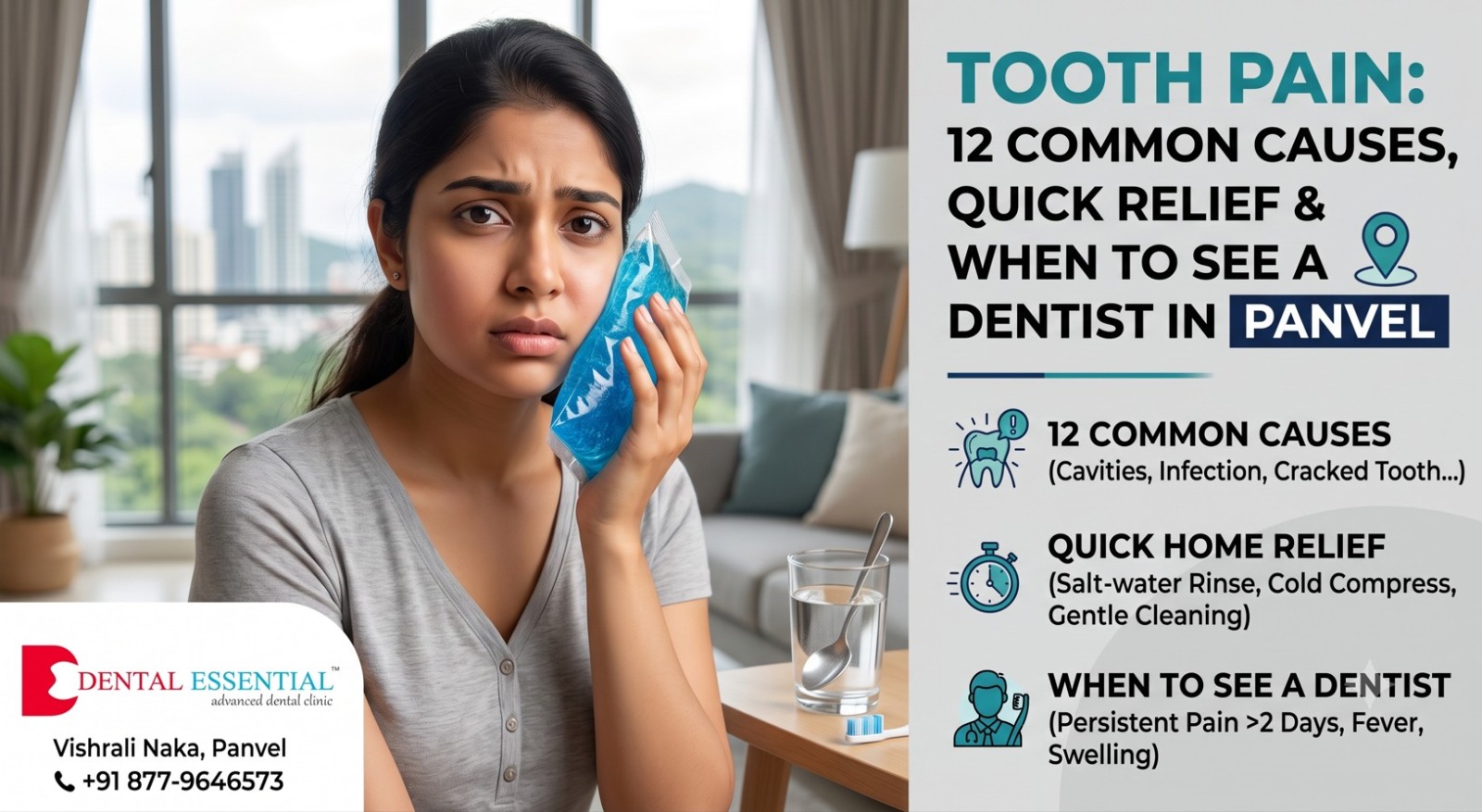
See a dentist if the toothache lasts for more than one or two days, repeatedly returns, is getting worse, or occurs with pain while biting, swollen gums, fever or a bad taste in the mouth. NHS and global dental guidelines similarly recommend dental assessment when toothache lasts more than two days or occurs with warning signs.
What Does Tooth Pain Feel Like? (Symptom Checker)
Not all toothaches feel the same. The type and timing of pain can provide valuable diagnostic clues about what is happening beneath the surface:
| Type of Tooth Pain | What It May Suggest | Recommended Action |
|---|---|---|
| Brief sensitivity to cold | Exposed dentin, gum recession, early enamel decay | Use sensitive toothpaste; schedule routine checkup |
| Sharp pain when biting down | Cracked tooth, loose filling, periapical inflammation | Avoid chewing on that side; see dentist to prevent fracture |
| Lingering pain after hot or cold | Irreversible pulpitis (inflamed or dying nerve) | Clinical pulp test; likely needs root canal treatment |
| Constant throbbing toothache | Deep decay, acute nerve infection, dental abscess | Urgent dental visit; infection will not resolve on its own |
| Pain at the back of the jaw | Impacted wisdom tooth, inflamed gum flap | X-ray evaluation for wisdom tooth extraction |
| Upper back teeth aching together | Maxillary sinus pressure or sinus infection | Rule out dental infection first with intraoral exam |
| Morning jaw and tooth soreness | Bruxism (night-time teeth grinding) or clenching | Custom protective night guard & bite evaluation |
| Toothache with swelling or fever | Active dental abscess / spreading infection | Urgent appointment for drainage & definitive treatment |
The pattern can guide diagnosis, but symptoms alone cannot reliably tell you whether you need a filling, root canal treatment, gum treatment, crown or extraction. A comprehensive clinical and radiographic examination is essential.
12 Common Causes of Tooth Pain
✦1. Tooth Decay and Dental Cavities
Tooth decay is one of the most common causes of toothache. Decay develops when bacteria in dental plaque interact with sugars and starches from foods and drinks, producing acids that gradually demineralize tooth enamel.
Early decay may produce no symptoms at all. As the cavity progresses deeper into the dentin, you may experience:
The National Institute of Dental and Craniofacial Research (NIDCR) explains that untreated tooth decay can progress from enamel damage to an open cavity and may eventually cause severe pain, infection and tooth loss.
How is a cavity treated?
Treatment depends on how deeply the decay has progressed:
✦2. Inflammation or Infection of the Tooth Nerve (Pulpitis)
Inside every natural tooth lies the dental pulp—a soft vascular chamber containing nerves, blood vessels and connective tissues. Deep decay, cracks, dental trauma or repeated procedures can severely irritate this sensitive tissue.
If the nerve cannot recover, a dentist will recommend a root canal treatment to eliminate the infection and preserve your natural tooth. Dental Essential offers advanced single-visit and multi-visit painless root canal procedures right in Panvel.
✦3. Dental Abscess or Tooth Infection
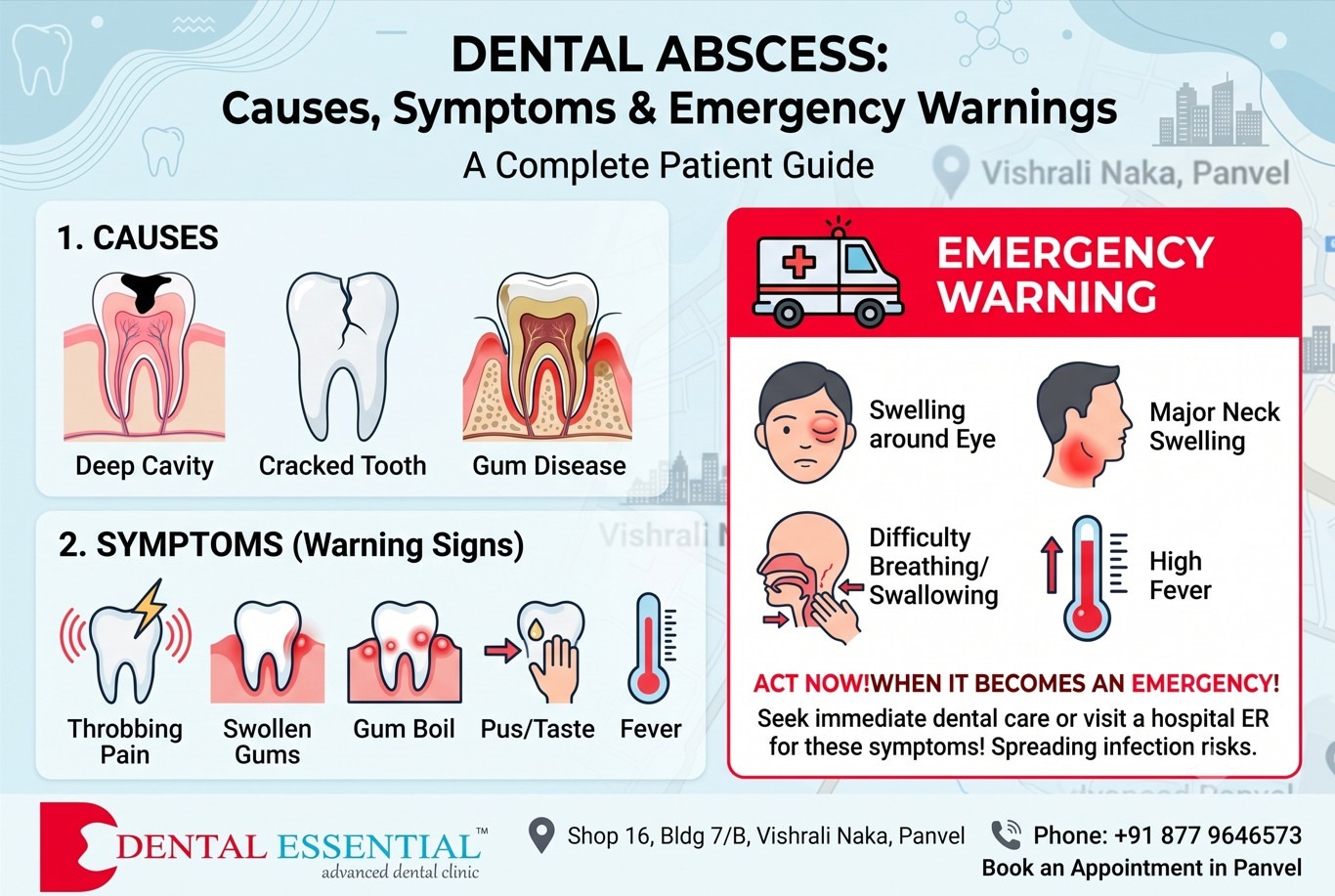
A dental abscess is an accumulation of pus caused by a bacterial infection. It typically develops when bacteria penetrate deep into the pulp through advanced decay, fractures or severe periodontal pockets, spreading to the root apex and surrounding jawbone.
Common symptoms include:
Can antibiotics cure an infected tooth?
No. Antibiotics enter the bloodstream, but inside a dead or severely infected tooth pulp, there is no active blood supply. Antibiotics may temporarily control systemic spread, but they cannot eliminate the source of infection inside the tooth. Definitive dental treatment—either a root canal or tooth extraction with drainage—is mandatory.
✦4. Cracked, Chipped or Fractured Tooth
A tooth can crack from biting into hard objects (such as ice, hard candy or bones), accidents, sports injuries, long-term teeth grinding, or around large, aged amalgam fillings that weaken the remaining tooth structure.
A hallmark sign of a cracked tooth is sharp, piercing pain upon biting down or releasing chewing pressure, often accompanied by erratic sensitivity to hot and cold.
✦5. Loose, Broken or Leaking Dental Filling or Crown
Dental restorations are durable, but they do not last forever. Over years of chewing pressure, a filling or crown may wear down, crack, loosen or lose its marginal seal.
When this occurs, oral bacteria and fluids seep underneath, exposing sensitive dentin and causing:
Digital X-rays are typically required to identify secondary or recurrent decay beneath older restorations. Treatment involves replacing the filling, crafting a new precision crown or bridge, or endodontic treatment if decay has penetrated the nerve.
✦6. Gum Disease (Gingivitis and Periodontitis)
Not all toothaches originate inside the tooth itself. Infection of the gums and alveolar bone supporting the tooth can produce deep, aching discomfort.
If you have tooth pain combined with bleeding gums, using sensitivity toothpaste will not cure the underlying infection. A professional periodontal assessment, ultrasonic scaling, and deep cleaning are critical to stop bone loss.
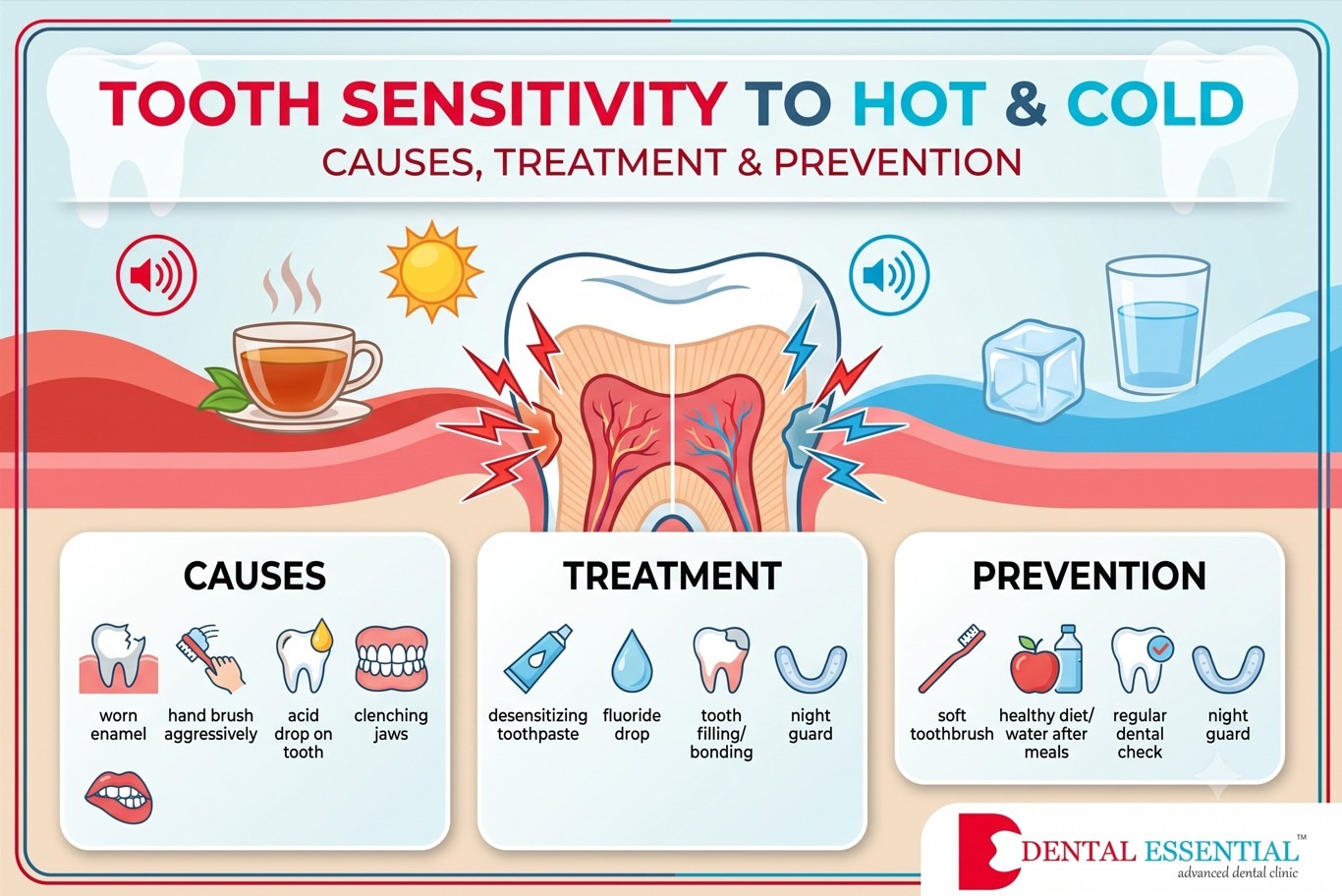
✦7. Gum Recession and Exposed Tooth Roots (Dentin Hypersensitivity)
Taking a sip of cold water or hot chai and feeling a sudden, electric jolt is a classic sign of dentin hypersensitivity. It happens when the protective enamel wears down or the gums recede, leaving microscopic tubules in the dentin exposed to the oral environment.
Triggers commonly include:
Desensitizing toothpastes and in-clinic fluoride varnishes provide relief for exposed roots. However, if sensitivity affects only one specific tooth or lingers for more than a few seconds, it should be checked for decay or micro-cracks.
✦8. Impacted or Infected Wisdom Tooth (Pericoronitis)
Third molars (wisdom teeth) typically erupt between ages 17 and 25. Because modern jaws often lack sufficient space, wisdom teeth frequently become partially erupted, tilted or completely impacted beneath bone and gum tissue.
When a wisdom tooth is partially erupted, an overlying flap of gum tissue (operculum) traps food particles and bacteria, causing painful pericoronitis:
A dental consultation and OPG or digital X-ray will reveal whether the tooth can erupt safely or if wisdom tooth extraction in Panvel is recommended.
✦9. Teeth Grinding or Clenching (Bruxism)
Many people clench or grind their teeth involuntarily during sleep due to stress, sleep disorders or misaligned bites. Over time, these heavy forces strain teeth, periodontal ligaments, jaw muscles and the temporomandibular joint (TMJ).
Common symptoms:
A custom-fabricated dental night guard protects your enamel, absorbs grinding forces, and relaxes strained jaw muscles.
✦10. Food Trapped Between Teeth (Interdental Impaction)
A localized, painful ache between two teeth can sometimes stem from fibrous foods (such as meat fibres, leafy vegetables, corn or fruit seeds) wedged tightly against the interdental gum papilla.
✦11. Post-Dental Treatment or Orthodontic Soreness
Mild soreness is normal and expected following certain dental procedures:
This discomfort should steadily improve over a few days. If the pain intensifies, prevents you from closing your mouth normally, or is accompanied by swelling, contact your dentist for an occlusal adjustment or evaluation.
✦12. Referred Pain from Sinuses or Jaw Joints
Because the roots of upper premolars and molars sit directly beneath the maxillary sinus cavities, acute or chronic sinusitis can produce referred toothache that mimics dental pain.
Clues that toothache may be sinus-related:
A dentist can examine your teeth, perform pulp vitality tests and take digital X-rays to confirm whether the teeth are healthy before recommending medical sinus evaluation.
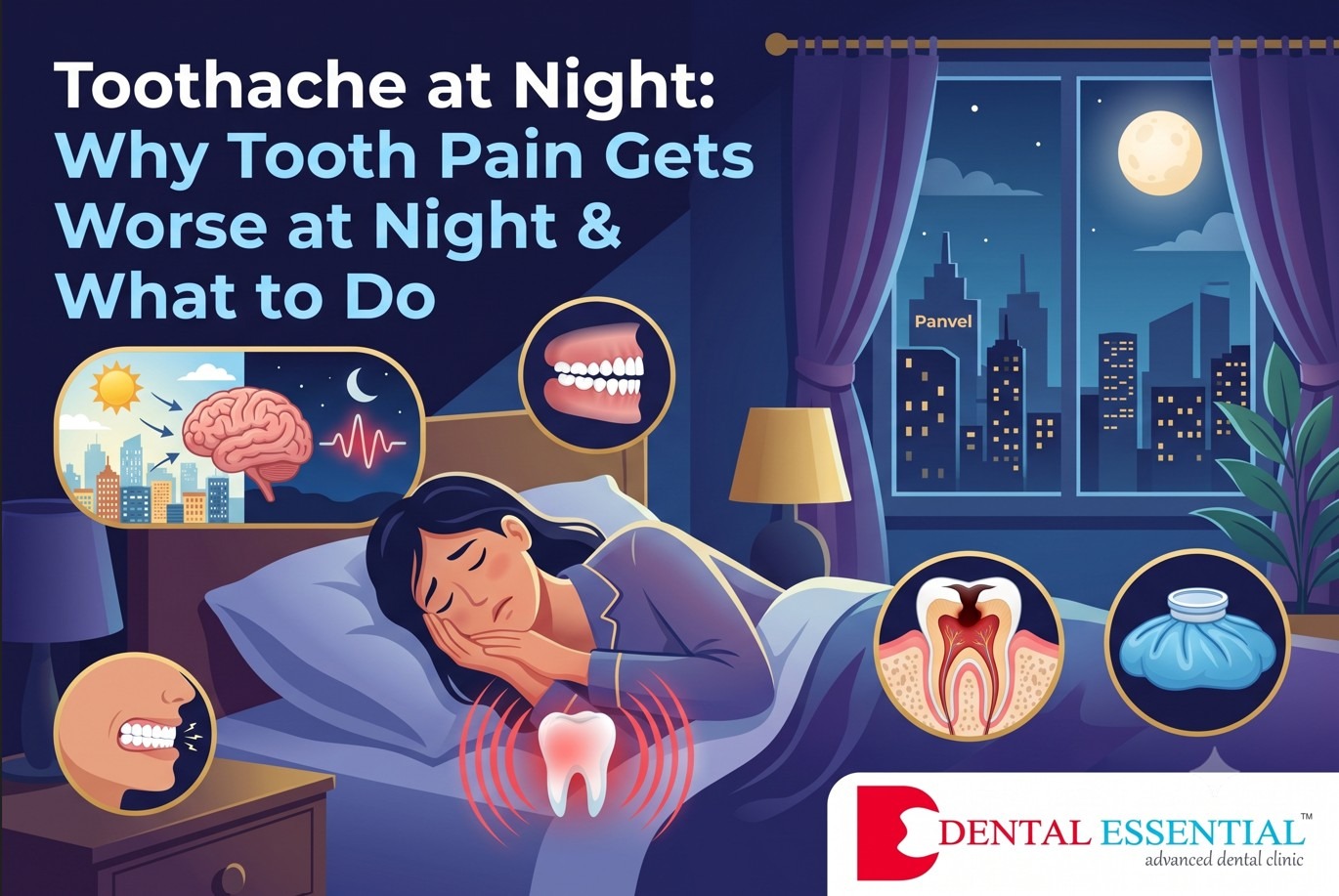
Why Does Tooth Pain Often Get Worse at Night?
One of the most frequent questions patients ask is: *"Why does my tooth hurt so much more when I lie down to sleep?"*
Safe Home Relief vs Dangerous Practices
✦Safe At-Home Temporary Relief
✦❌ What You Must NEVER Do:
When Is Tooth Pain a Dental Emergency?
| Severity | Symptoms | Recommended Action |
|---|---|---|
| 🔴 Immediate Medical Emergency | Swelling spreading to the eye, throat, or neck; difficulty breathing or swallowing | Go to the nearest emergency hospital immediately |
| 🟠 Urgent Dental Emergency | Severe throbbing pain, facial swelling, pus discharge, knocked-out or fractured tooth, fever | Visit an emergency dental clinic in Panvel within a few hours |
| 🟡 Same-Week Dental Visit | Toothache lasting > 2 days, sharp pain when biting, food trapping, lost filling | Book a routine dental appointment within 24–48 hours |
| 🟢 Routine Dental Care | Mild, fleeting cold sensitivity that resolves in seconds, minor gum tenderness | Schedule a regular dental checkup and professional cleaning |
How a Dentist Diagnoses and Treats Tooth Pain
A successful dental treatment starts with pinpoint diagnosis rather than guesswork. When you visit Dental Essential in Panvel, the clinical evaluation includes:
✦Professional Treatment Solutions:
Tooth Pain in Children: Advice for Parents
Never dismiss a child's toothache simply because it affects a "milk tooth" (primary tooth). Primary teeth maintain proper space for permanent teeth, enable healthy nutrition, and assist in speech development. Untreated infections in baby teeth can damage underlying permanent tooth buds.
If your child experiences toothache, inspect their mouth for trapped food, rinse gently with warm water, and book an appointment with our pediatric dentistry team in Panvel.
Preventive Habits for Busy Panvel Residents
Between long daily commutes on the Harbour line, demanding work hours, and vibrant local festivals (such as Ganeshotsav and Diwali), dental hygiene routines can slip.
Visit Dental Essential – Advanced Dental Clinic in Panvel
Don't let tooth pain disrupt your life, work, and sleep. At Dental Essential, our experienced team led by Dr. Sameer Ramchandra Gharat (BDS, MDS – Prosthodontics & Implantology with 16+ years of clinical experience) provides gentle, accurate and lasting relief for all types of tooth and jaw pain.
Frequently Asked Questions About Tooth Pain
✦1. What is the fastest way to relieve tooth pain at home?
Rinsing with warm salt water, applying a cold compress to the cheek, keeping your head elevated, and taking an appropriate over-the-counter pain reliever offer the quickest temporary relief. These measures soothe symptoms but do not eliminate the root cause, so visit a dentist promptly.
✦2. Can a toothache go away without dental treatment?
Minor gum irritation from trapped food or temporary sensitivity may resolve on its own. However, tooth pain caused by decay, cracks, or pulp infections will not heal spontaneously. If the pain suddenly vanishes after days of throbbing, it often signifies that the nerve has died, while the underlying infection continues to spread silently into the jawbone.
✦3. How long should I wait before seeing a dentist for tooth pain?
If a toothache lasts longer than 1–2 days, repeatedly returns, or throbs at night, see a dentist immediately. Do not wait at all if you have facial swelling, fever, pain on biting, foul-tasting discharge, or difficulty opening your mouth.
✦4. Why does my tooth hurt when I bite down?
Biting pain typically points to a cracked tooth, deep cavity, inflamed root ligament (apical periodontitis), an infected abscess, or an old filling that has loosened. A clinical exam and digital X-ray will identify the exact issue.
✦5. Why does my toothache get worse at night?
Lying down increases blood circulation and pressure in your head and pulp chamber. Additionally, fewer distractions and unconscious night-time teeth clenching amplify pain perception. Elevating your head with pillows can provide temporary comfort.
✦6. Does severe tooth pain always mean I need a root canal?
No. While severe pain often indicates nerve involvement, some cases only require replacing a leaking filling, deep gum scaling, or treating a wisdom tooth. Your dentist will perform pulp vitality tests to see if a root canal is truly necessary.
✦7. Can antibiotics cure tooth pain?
No. Antibiotics do not penetrate a non-vital tooth pulp chamber and cannot repair cavities or physical cracks. They are only prescribed in specific cases where infection has spread systemically to surrounding tissues.
✦8. Is warm salt water good for toothache?
Yes. Warm salt water is a natural disinfectant that reduces oral bacteria and eases gum inflammation. However, it cannot cure an active cavity or deep dental abscess.
✦9. Can sinus problems cause tooth pain?
Yes. The roots of your upper back molars lie close to the maxillary sinuses. When sinuses become inflamed or congested, they can exert pressure on tooth nerves, causing multiple upper teeth to ache. A dental X-ray will differentiate between sinus pressure and tooth decay.
✦10. When is tooth pain considered a medical emergency?
Toothache accompanied by swelling that spreads to your neck or around your eyes, difficulty breathing, difficulty swallowing, or high fever is a medical emergency requiring immediate hospital or emergency dental care.
✦11. Where can I find tooth pain treatment in Panvel?
Dental Essential at Vishrali Naka, Panvel offers comprehensive emergency diagnosis and pain relief, including digital X-rays, painless root canals, fillings, and wisdom tooth care. Call +91 877-9646573.
✦12. How do I choose the best dentist in Panvel for tooth pain?
Look for a clinic with verified postgraduate qualifications (such as MDS specialists), modern digital diagnostic equipment (RVG X-rays), strict sterilisation standards, clear explanation of treatment options, and positive patient reviews.
Ready for a Healthier, Straighter Smile?
Consult with expert dentists at Dental Essential Clinic in Panvel. Get personalized treatment plans & affordable care.
Share this article