



Why Do Hot and Cold Foods Hurt Your Teeth? Complete Panvel Guide
You take the first sip of hot morning tea and suddenly feel a sharp pain in one tooth.
Later, a glass of cold water causes the same electric-like sensation.
You may immediately wonder:
Why are my teeth suddenly sensitive to hot and cold?
Why does cold water hurt my tooth?
Why does hot tea cause pain in just one tooth?
Is this simply tooth sensitivity, or could it be a cavity, cracked tooth or nerve problem?
Tooth sensitivity is common, but it should not automatically be dismissed as harmless.
In many people, sensitive teeth develop when protective tooth enamel becomes worn or when the gums recede and expose the underlying dentin. Dentin contains microscopic channels that allow temperature changes, sweets, acids and even cold air to stimulate the nerve inside a tooth more easily.
However, tooth sensitivity to hot and cold can also occur because of tooth decay, cracked teeth, gum disease, teeth grinding, damaged fillings, whitening treatments or inflammation inside the tooth.
That means the most useful question is not simply:
“How do I stop sensitive teeth?”
It is:
“Why has this tooth become sensitive?”
Quick Answer: Why Are My Teeth Sensitive to Hot and Cold?
Teeth commonly become sensitive when dentin is exposed or when a dental problem allows temperature changes to irritate deeper tooth structures.
Common causes include:
A brief, sharp sensation that disappears almost immediately after the hot or cold stimulus is removed may be associated with exposed dentin.
However, lingering, worsening, spontaneous or severe sensitivity—especially in one tooth—should be examined by a dentist because cavities, cracks and inflammation of the dental pulp can cause similar symptoms.
What Exactly Is Tooth Sensitivity?
Tooth sensitivity is often referred to as dentin hypersensitivity.
Understanding why it happens becomes easier when you understand the basic structure of a tooth.
✦Enamel
Enamel is the hard protective outer covering of the visible part of the tooth.
It protects the softer internal structures from temperature, pressure and chemicals.
✦Dentin
Dentin lies underneath enamel.
It is softer than enamel and contains thousands of microscopic channels called dentinal tubules.
✦Dental Pulp
The dental pulp sits inside the tooth and contains nerves, blood vessels and connective tissue.
When enamel becomes thin or gums recede, dentin may become exposed.
Hot or cold temperatures can then travel through the microscopic dentinal tubules and stimulate the nerves inside the tooth.
That can produce the familiar short, sharp or electric-like pain associated with sensitive teeth.
What Does Tooth Sensitivity Feel Like?
Tooth sensitivity can feel different from one person to another.
Common descriptions include:
Sensitivity may affect:
The duration of the pain is often particularly important.
Brief Sensitivity vs Lingering Tooth Pain
One of the most useful differences to understand is how long the discomfort lasts after the trigger disappears.
✦Brief Sensitivity
Imagine drinking cold water.
You feel a sharp sensation.
You stop drinking.
Within a second or two, the discomfort disappears.
This pattern can occur with:
It does not automatically mean the dental nerve is seriously damaged.
However, recurring sensitivity still deserves attention.
✦Lingering Sensitivity
Now imagine drinking cold water and the tooth continues aching after you have finished.
The pain may continue for:
Hot tea may produce a deep ache rather than a quick shock.
This type of lingering hot or cold sensitivity can indicate greater inflammation inside the tooth.
If the sensitivity continues after the trigger has gone, becomes stronger or begins occurring without any obvious trigger, arrange a dental assessment.
| Sensitivity Pattern | Sensation & Duration | Likely Underlying Cause | Recommended Dental Step |
|---|---|---|---|
| Brief Sensitivity (< 2–3 sec) | Sharp, electric-like jolt that ends immediately when stimulus stops | Exposed dentin, gum recession, cervical enamel erosion, post-scaling sensitivity | Soft brush, desensitising toothpaste, fluoride varnish |
| Lingering Sensitivity (10–30+ sec) | Deep dull ache or throbbing continuing long after food/drink is finished | Irreversible pulpitis (inflamed or dying dental nerve), deep decay | Dental checkup; likely requires root canal treatment |
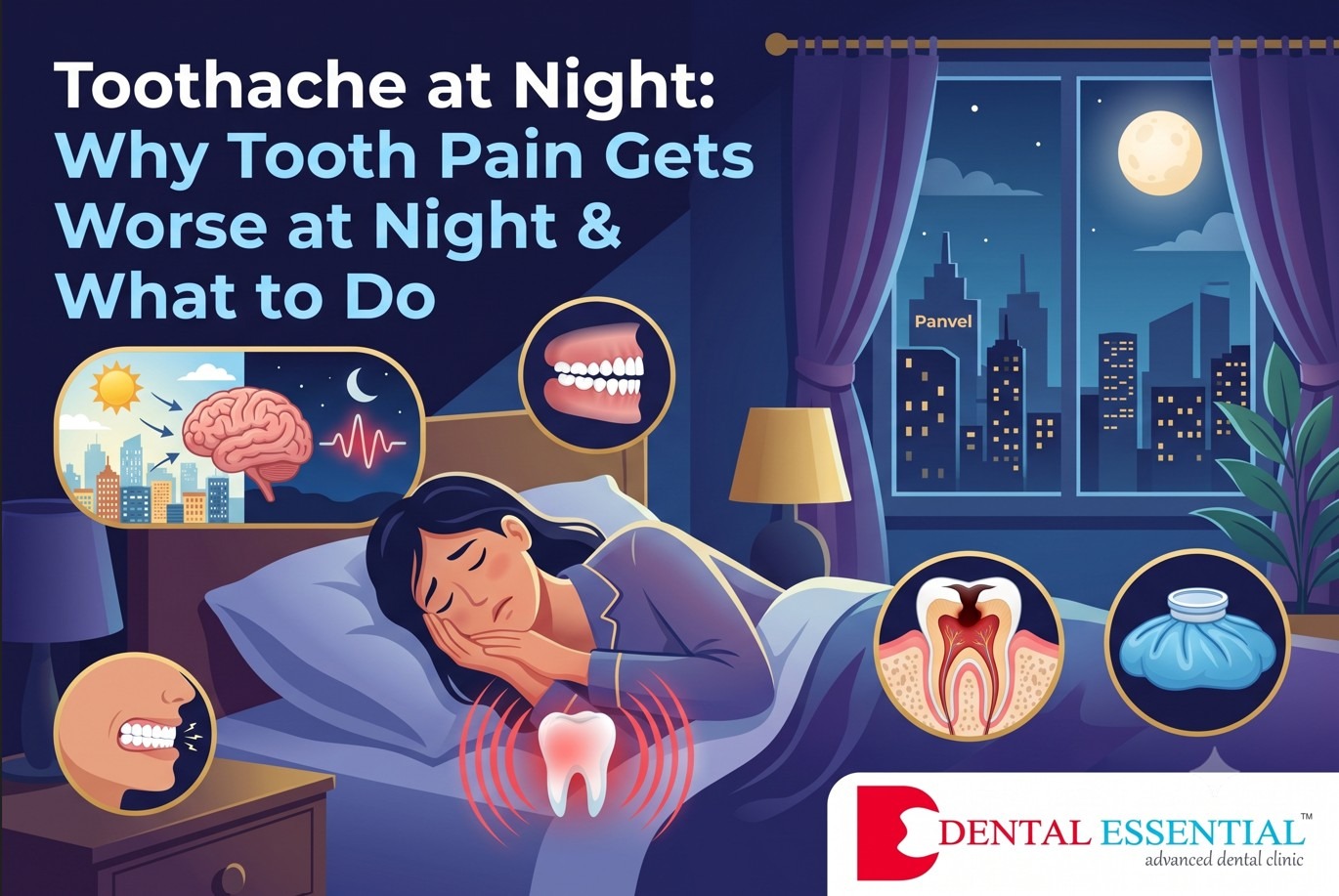
| Spontaneous Night Pain | Toothache starts on its own without hot/cold trigger; wakes you from sleep | Advanced pulp necrosis, periapical abscess, deep root fracture | Urgent dental visit; infection will not resolve on its own |
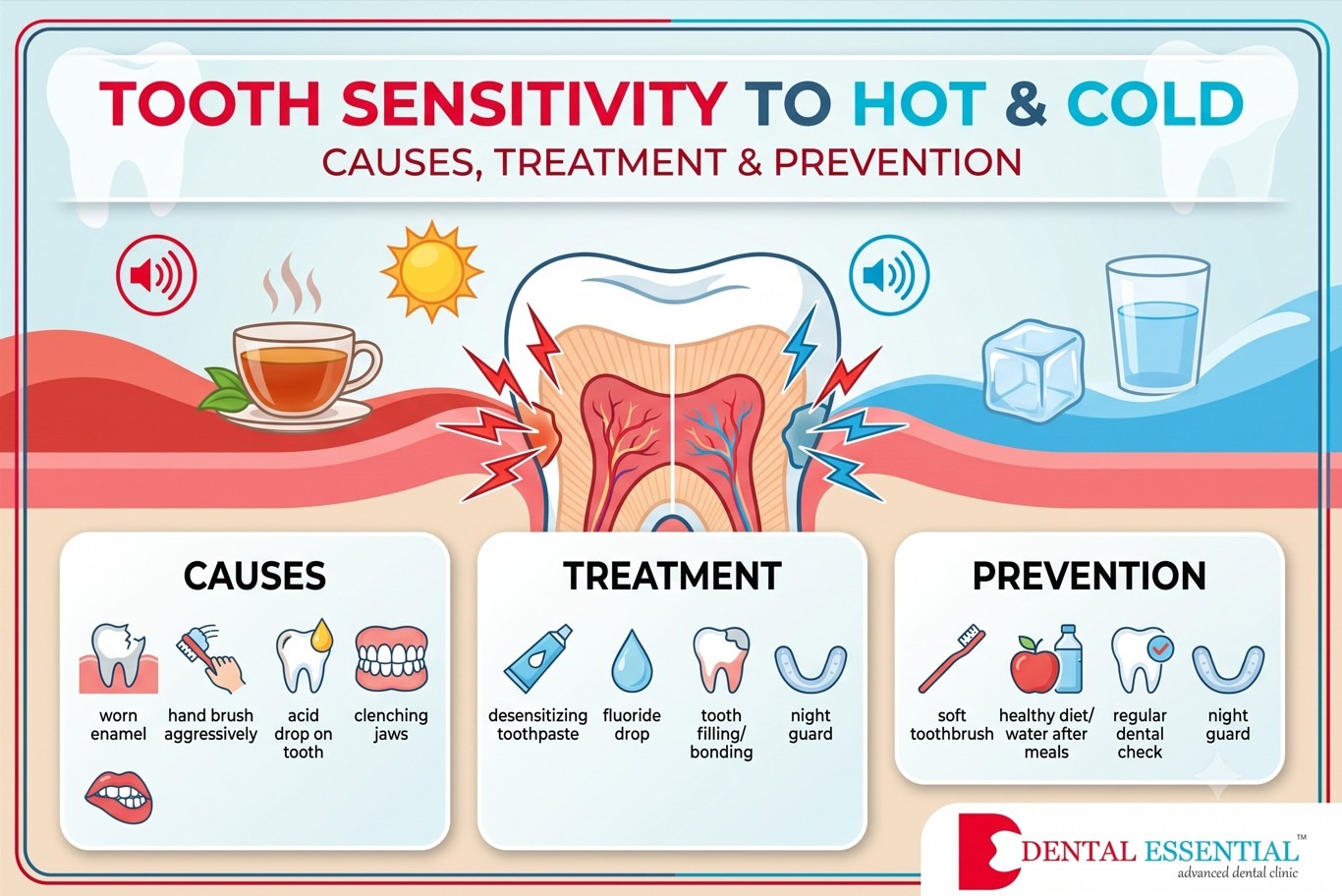
12 Common Causes of Tooth Sensitivity to Hot and Cold
✦1. Worn Tooth Enamel
Enamel forms the protective outer barrier of your teeth.
Over time, it can become worn because of:
As enamel becomes thinner, the underlying dentin becomes more exposed to temperature changes.
Cold water, ice cream, hot tea or even cold air may then produce a sudden sharp sensation.
Can worn enamel grow back?
Once substantial enamel structure has been physically lost, it does not simply grow back.
However, fluoride can strengthen the remaining enamel and support remineralisation of very early mineral damage.
That is why regular use of fluoride toothpaste remains an important part of preventive dentistry.
✦2. Gum Recession and Exposed Tooth Roots
The root surfaces of teeth do not have the same thick enamel covering as the crowns.
Normally, the gums protect these surfaces.
When gums recede, the underlying root can become exposed.
This may cause sensitivity to:
Gum recession can occur because of:
If a tooth appears longer than it used to, gum recession may be contributing.
Treatment may involve:
✦3. Brushing Your Teeth Too Hard
Brushing harder does not necessarily make teeth cleaner.
Aggressive scrubbing can gradually contribute to:
Use a soft-bristled toothbrush and gentle pressure.
The goal is to clean plaque from the tooth surface, not scrub the enamel aggressively.
If you repeatedly experience sensitivity near the gum line, ask your dentist whether brushing technique is contributing.
✦4. Acidic Foods and Drinks
Frequent exposure to acids can soften and gradually erode enamel.
Common acidic foods and beverages include:
The important issue is often how frequently teeth are exposed to acid, not whether you occasionally eat one particular food.
Should you brush immediately after acidic food or drinks?
Usually, it is better not to brush immediately after strong acid exposure.
Acid temporarily softens the enamel surface.
Rinse with water and allow saliva time to neutralise the mouth before brushing.
✦5. Tooth Decay or Dental Cavity
A sensitive tooth may be an early warning sign of a cavity.
As decay progresses through enamel and reaches dentin, you may notice:
If decay is diagnosed early enough, treatment may involve a relatively straightforward filling.
For patients searching for tooth-coloured filling treatment in Panvel, a dental examination can determine whether a filling is sufficient.
If the cavity progresses deeper toward the nerve, more extensive treatment may become necessary.
✦6. Cracked or Chipped Tooth
A cracked tooth can cause significant sensitivity even when the crack is difficult to see.
Symptoms may include:
Cracks can develop from:
Depending on the depth of the crack, treatment may involve:
If one tooth suddenly becomes sensitive to cold, especially after biting something hard, a crack is one possible cause.
✦7. Gum Disease
Gum disease may contribute to sensitivity when inflammation and loss of supporting gum tissue expose root surfaces.
Other symptoms may include:
If sensitivity occurs together with bleeding or swollen gums, switching toothpaste alone may not solve the problem.
Professional treatment may include:
✦8. Teeth Grinding and Clenching
Grinding or clenching the teeth is called bruxism.
Some people clench their teeth while working or concentrating.
Others grind during sleep without knowing it.
Repeated pressure can contribute to:
If you wake up with sore jaw muscles, headaches or sensitive teeth, mention this during your dental check-up.
A custom night guard may be recommended in appropriate cases.
✦9. Teeth Whitening
One of the most common temporary side effects of tooth whitening is sensitivity.
Peroxide-based whitening agents can temporarily increase movement through dentin and stimulate the inner nerve.
Sensitivity after whitening is often temporary.
However, whitening should not be used to disguise untreated dental disease.
People with:
should ideally have a dental evaluation before beginning whitening treatment.
✦10. Recent Dental Cleaning, Filling, Crown or Other Treatment
Temporary sensitivity can sometimes occur after dental procedures.
After Professional Teeth Cleaning
Root surfaces that were previously covered by tartar may temporarily feel sensitive after deposits are removed.
After a Dental Filling
A tooth may remain sensitive for a short period after filling treatment, particularly if the original cavity was deep.
After a Dental Crown
Some teeth experience temporary sensitivity while the tooth and surrounding tissues adjust.
After Whitening
Temporary cold sensitivity can occur following bleaching procedures.
Contact your dentist if the discomfort:
✦11. Worn, Broken or Leaking Filling
Dental restorations can eventually wear, crack or lose their seal.
When this happens, underlying tooth structure may become exposed.
Possible symptoms include:
A clinical examination and dental X-ray may help determine whether the filling needs replacement or whether deeper decay has developed beneath it.
✦12. Inflammation or Infection Inside the Tooth
Deep decay, trauma or cracks may irritate the dental pulp—the nerve-containing tissue inside a tooth.
Early inflammation may produce sensitivity.
More advanced inflammation can cause:
If the dental pulp becomes irreversibly inflamed or infected but the tooth can still be restored, root canal treatment may be recommended.
Patients requiring root canal treatment in Panvel should be properly examined before deciding whether root canal therapy, filling treatment or another procedure is appropriate.
Why Does Cold Water Hurt My Teeth?
Cold sensitivity is one of the most common complaints associated with sensitive teeth.
Cold can cause fluid inside exposed dentinal tubules to move rapidly.
That movement stimulates nerve endings and produces a sudden sharp sensation.
Cold sensitivity may be associated with:
The most important question is not simply whether cold causes pain.
Ask:
How long does the pain continue after the cold stimulus disappears?
A quick sensation that disappears immediately is different from pain that continues long afterwards.
Why Does Hot Tea or Coffee Hurt My Tooth?
Heat sensitivity deserves particular attention when it is:
Hot liquids may stimulate inflamed tissues inside an unhealthy tooth.
Persistent heat sensitivity should therefore not be managed indefinitely using sensitivity toothpaste without determining the cause.
For many families in Panvel and Navi Mumbai, morning and evening chai is part of everyday life.
If one particular tooth hurts every time you drink hot tea, tell your dentist exactly:
These details can help with diagnosis.
Cold Sensitivity vs Heat Sensitivity: Is One More Serious?
Neither symptom should be diagnosed based on temperature alone.
However, the pain pattern can provide useful clues.
✦Brief Cold Sensitivity
May occur with exposed dentin or mild sensitivity.
✦Lingering Cold Sensitivity
May indicate greater pulp irritation.
✦Persistent Heat Sensitivity
Can sometimes occur when tissues inside a tooth are significantly inflamed.
✦Spontaneous Hot and Cold Pain
Requires professional dental assessment.
The diagnosis must be based on an examination and, where appropriate, additional testing.
| Thermal Trigger | Typical Presentation | Diagnostic Significance | Common Solution |
|---|---|---|---|
| Cold (Water, Ice, Air) | Sharp, quick shock; very common | Exposed dentinal tubules, enamel abrasion, minor gum recession | Desensitising toothpaste, bonding, fluoride |
| Hot (Tea, Coffee, Soup) | Dull, throbbing, long-lasting ache | Advanced nerve involvement or bacterial gas buildup in closed pulp chamber | Professional assessment; often root canal treatment |
| Sweet / Acidic Foods | Quick twinge upon contact | Active cavity (enamel demineralization) or leaky restoration margin | Tooth-coloured composite filling |
| Biting + Temperature | Piercing ache when chewing down | Cracked tooth, loose filling or infected root apex | Crown protection or root canal |
Why Is Only One Tooth Sensitive to Cold?
When many teeth are sensitive, possible general causes include:
When only one tooth becomes sensitive, local problems become more important.
Possible causes include:
Persistent one-tooth sensitivity should not simply be assumed to be ordinary dentin sensitivity.
Why Are All My Teeth Suddenly Sensitive?
Generalised sensitivity affecting many teeth may sometimes occur after:
If many teeth suddenly become sensitive without an obvious reason, arrange a dental assessment.
Can Tooth Sensitivity Mean a Cavity?
Yes.
A cavity is one possible explanation for temperature sensitivity.
But not every sensitive tooth has decay.
Other possibilities include:
A dentist may examine:
That is why two patients with similar symptoms can require completely different treatments.
Does Tooth Sensitivity Mean You Need a Root Canal?
No.
Most people with sensitive teeth do not automatically need a root canal.
Sensitivity caused by exposed dentin or gum recession may improve with:
A cavity may need a filling.
A damaged restoration may need replacement.
A cracked tooth may require restorative treatment.
Root canal treatment is considered when the dental pulp is irreversibly inflamed or infected and the tooth can still be saved.
How Is Tooth Sensitivity Diagnosed?
Good treatment begins with a proper diagnosis.
✦Symptom History
Your dentist may ask:
✦Visual Dental Examination
The dentist may check for:
✦Dental X-Ray
A dental X-ray may help detect:
Not every sensitive tooth requires an X-ray.
The dentist decides whether imaging is necessary based on the clinical findings.
✦Pulp Sensitivity Testing
Cold or other pulp tests may help determine how the dental nerve responds.
The intensity and duration of the response provide useful diagnostic information.
✦Bite Testing
If a crack is suspected, the dentist may test the tooth under controlled biting pressure.
✦Gum Examination
The gums may be checked for recession, inflammation and periodontal disease.
This diagnostic process is more reliable than assuming every sensitive tooth needs sensitivity toothpaste.
Treatment for Tooth Sensitivity to Hot and Cold
Treatment depends on the cause.
There is no single solution appropriate for every sensitive tooth.
✦1. Desensitising Toothpaste
For uncomplicated dentin hypersensitivity, toothpaste formulated specifically for sensitive teeth may help.
These products may work by:
Common active technologies include formulations containing:
Do not expect every toothpaste to work immediately after one use.
Consistent use is usually necessary.
✦2. Fluoride Treatment
Fluoride strengthens tooth enamel and can help reduce sensitivity in appropriate cases.
A dentist may recommend:
✦3. Dental Bonding or Dentin Sealant
When exposed root surfaces cause sensitivity, bonding material or a dentin sealant may be placed over the sensitive area.
This reduces transmission of temperature changes through the dentin.
✦4. Tooth-Coloured Dental Filling
If a cavity is causing sensitivity, desensitising toothpaste will not remove the decay.
The damaged tissue may need to be removed and restored.
Depending on the tooth and clinical situation, a tooth-coloured composite restoration may be suitable.
Patients searching for tooth-coloured filling treatment in Panvel should have the cavity assessed before it progresses toward the nerve.
✦5. Gum Treatment
If gum disease is exposing root surfaces, periodontal treatment becomes important.
Treatment may include:
✦6. Gum Graft
Patients with significant gum recession may sometimes benefit from a gum-grafting procedure.
This can help cover exposed roots and improve protection.
It is not required for every case.
✦7. Night Guard for Teeth Grinding
If bruxism contributes to sensitivity and enamel wear, a custom night guard may help protect the teeth.
The purpose is to reduce damaging forces rather than simply hide the symptoms.
✦8. Repair or Replacement of a Filling or Crown
Sensitivity associated with a damaged restoration may require:
✦9. Root Canal Treatment
When severe sensitivity is caused by irreversible inflammation or infection of the dental pulp, root canal treatment may be required.
At Dental Essential – Advanced Dental Clinic in Panvel, patients experiencing severe sensitivity, toothache or possible nerve involvement can be evaluated before treatment is selected.
Depending on the individual case, some teeth may be suitable for single sitting root canal treatment in Panvel, while others require more than one appointment.
| Clinical Cause | In-Clinic Treatment Option | How It Solves Sensitivity |
|---|---|---|
| Exposed Dentin / Enamel Wear | Fluoride Varnish & In-Office Desensitizers | Deeply seals dentinal tubules against thermal stimulation |
| Cervical Notch / Tooth Wear | Tooth-Coloured Composite Bonding | Physically shields sensitive root dentin with aesthetic resin |
| Dental Cavity / Tooth Decay | Composite Filling | Removes bacteria and seals the cavity hermetically |
| Defective Filling or Crown | Restoration Repair or New Dental Crown | Replaces micro-leaking margins to stop bacterial infiltration |
| Gum Recession & Tartar | Deep Ultrasonic Scaling & Root Planing | Removes calculus causing gum inflammation and bone loss |
| Teeth Grinding (Bruxism) | Custom Night Guard | Cushions biting forces and protects enamel from fracturing |
| Irreversible Pulpitis / Infection | Painless Root Canal Treatment | Eliminates infected pulp, stopping pain while preserving tooth |
How Long Does Tooth Sensitivity Last?
The duration depends on the cause.
✦Mild Dentin Sensitivity
May gradually improve with desensitising toothpaste and oral-hygiene changes.
✦Sensitivity After Dental Cleaning
Temporary sensitivity may settle within a relatively short period.
✦Sensitivity After Whitening
Often temporary.
✦Sensitivity After a Filling or Crown
May improve as the tooth settles.
✦Sensitivity From a Cavity or Crack
May continue or worsen until the actual dental problem is treated.
✦Sensitivity From Pulp Inflammation
May eventually progress to spontaneous pain, night pain or infection.
Therefore, duration alone cannot determine whether sensitivity is harmless.
When Should You See a Dentist for Sensitive Teeth?
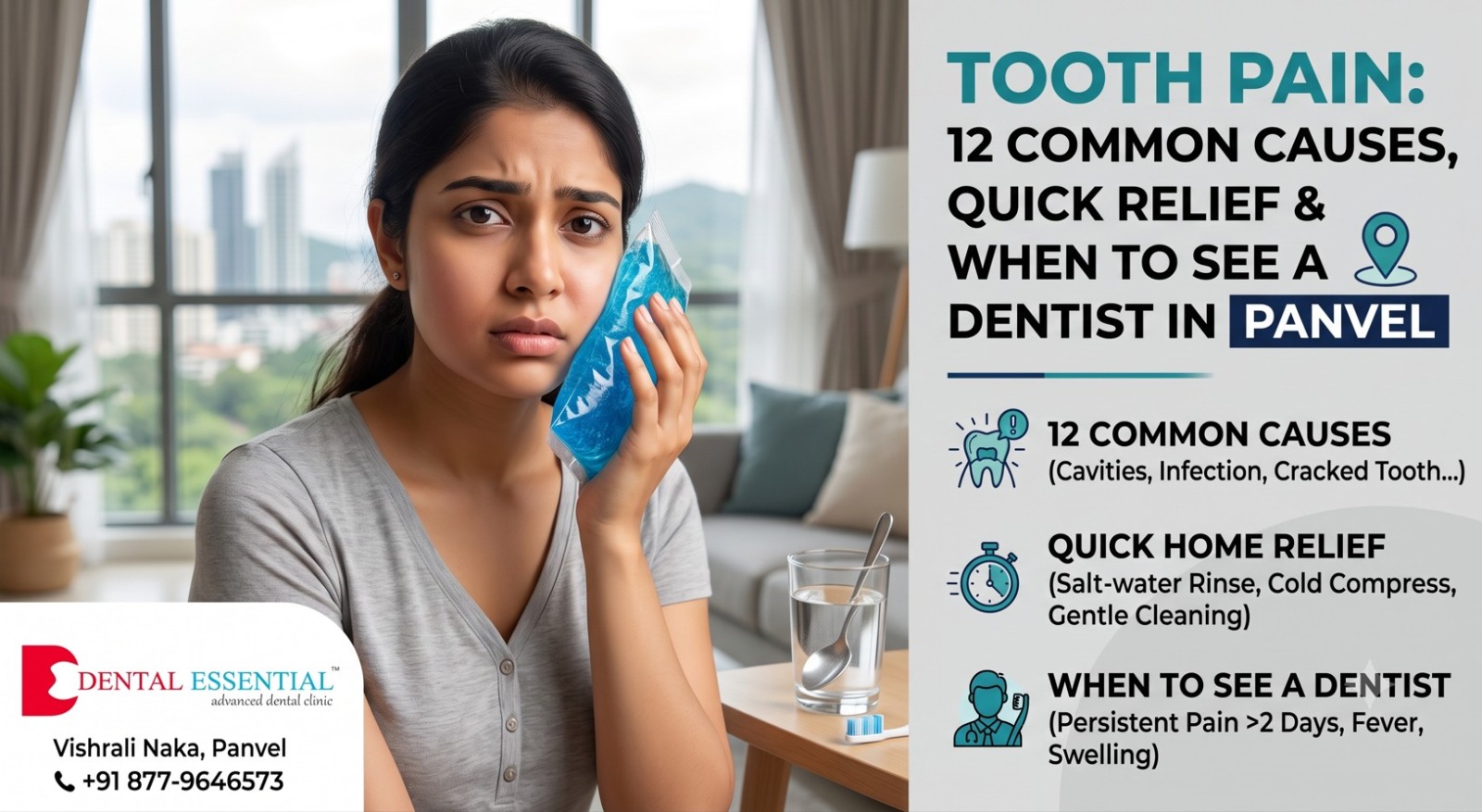
Arrange a dental appointment if:
A persistent temperature-sensitive tooth deserves diagnosis rather than indefinite self-treatment.
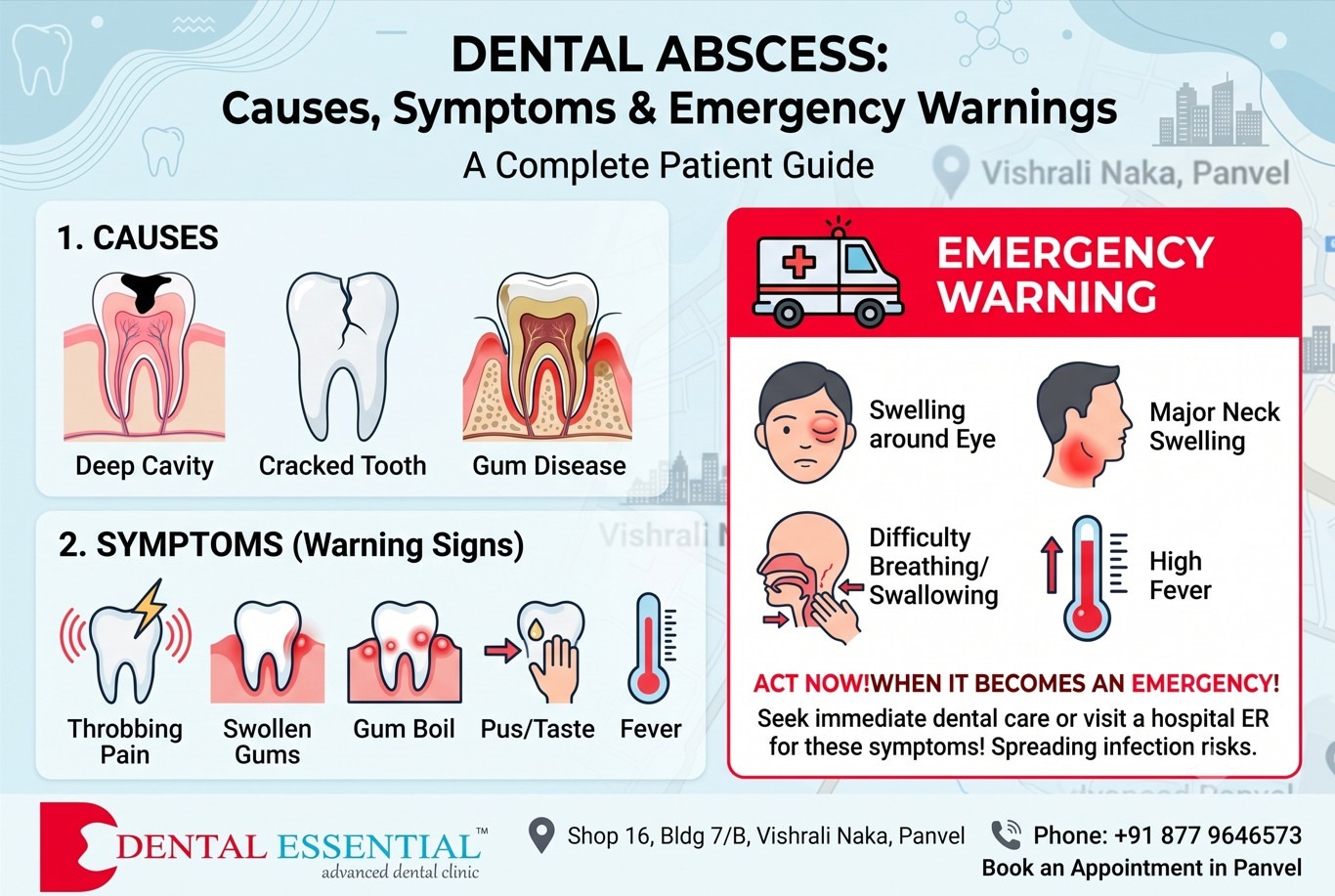
When Is Tooth Sensitivity an Emergency?
Simple dentin sensitivity is usually not a dental emergency.
However, seek prompt dental care if sensitivity occurs together with:
Difficulty breathing or swallowing associated with facial, mouth or neck swelling requires emergency medical attention.
Can Sensitive Toothpaste Permanently Cure Tooth Sensitivity?
Sensitive toothpaste can be very effective when exposed dentin is responsible.
But whether sensitivity can be permanently resolved depends on the cause.
✦Exposed Dentin
Desensitising toothpaste may significantly reduce symptoms.
✦Cavity
The cavity requires dental treatment.
✦Cracked Tooth
The crack requires evaluation and possibly restoration.
✦Gum Disease
Periodontal treatment may be necessary.
✦Damaged Filling
The restoration may need repair or replacement.
✦Pulp Infection
Root canal treatment or another definitive procedure may be required.
Sensitive toothpaste is therefore useful—but it should not be used indefinitely to hide an undiagnosed dental problem.
Best Toothpaste for Sensitive Teeth: What Should You Look For?
Instead of choosing a toothpaste only because the packaging says “instant relief,” look at the active ingredients and clinical purpose.
Sensitive-teeth formulations may work by:
Common ingredients include:
Fluoride is also valuable for cavity prevention.
If sensitivity continues despite regular use, consult a dentist.
Should You Stop Drinking Cold Water If You Have Sensitive Teeth?
Cold water itself is usually not the root cause.
It is often exposing an underlying problem.
Temporarily avoiding extreme temperatures may make you more comfortable, but the long-term goal should be finding out why the tooth reacts.
You should not have to organise your life around avoiding cold water indefinitely.
Is Hot Tea Bad for Sensitive Teeth?
Hot tea can trigger an already-sensitive tooth, but temperature alone does not necessarily mean the tea is damaging the tooth.
However, repeatedly sweetened tea increases sugar exposure.
For many households in Panvel and Navi Mumbai, chai is part of the daily routine.
You do not need to stop drinking tea simply because you experience sensitivity.
A practical approach is to:
Tooth Sensitivity and Everyday Life in Panvel
Tooth sensitivity is a biological dental condition.
It is not determined by someone’s religion, caste, community, political preference or income level.
However, daily routines can influence oral health.
Panvel is a growing residential and commuting hub connecting Navi Mumbai, Mumbai and surrounding areas.
Long workdays and commuting may make it easy to postpone a dental appointment when symptoms initially seem minor.
Someone may tolerate sensitivity for months simply by avoiding:
That strategy avoids the trigger but does not identify the cause.
Frequent consumption of:
also increases the frequency of carbohydrate exposure.
During celebrations such as Ganeshotsav, Diwali, weddings and family functions, sweets naturally form part of many families’ meals.
The practical approach is not to avoid every celebration.
Instead:
Preventive dentistry works best when it fits real life.
How to Prevent Tooth Sensitivity
✦1. Use a Soft-Bristled Toothbrush
Harder brushing is not better brushing.
Use gentle pressure.
✦2. Brush Twice Daily With Fluoride Toothpaste
Fluoride helps strengthen enamel and reduce tooth-decay risk.
✦3. Avoid Aggressive Brushing
Excess pressure may contribute to gum recession and enamel wear.
✦4. Clean Between Your Teeth
Use floss or another interdental cleaning method recommended by your dentist.
✦5. Limit Frequent Acid Exposure
Focus on reducing repeated acidic exposures throughout the day.
✦6. Reduce Frequent Sugary Snacking
Frequent sugar exposure increases the number of acid attacks on the enamel.
✦7. Do Not Ignore Gum Recession
Exposed root surfaces should be assessed.
✦8. Address Teeth Grinding
Morning jaw soreness, headaches or worn teeth may indicate bruxism.
✦9. Use Whitening Products Carefully
Overuse can increase sensitivity.
If you already have sensitive teeth, consult your dentist before whitening.
✦10. Attend Regular Dental Check-Ups
Routine dental visits may identify:
before they become more serious.
✦11. Treat Problems Early
A small cavity may need only a filling.
Deeper decay may require root canal treatment.
Early diagnosis often gives you more conservative treatment options.
Tooth Sensitivity in Children
Children can also develop sensitive teeth.
Possible causes include:
Children may not use the word “sensitivity.”
Parents may instead notice that the child:
Persistent symptoms should be evaluated by a child dentist or pediatric dentist.
Dental Essential provides pediatric dental care for families in Panvel and nearby areas.
Tooth Sensitivity During Pregnancy
Pregnancy can involve changes in gum tissues and oral health.
If sensitivity develops during pregnancy, inform your dentist.
Necessary dental evaluation should not automatically be postponed simply because you are pregnant.
Avoid self-medicating dental pain without professional advice.
Sensitive Teeth After Professional Cleaning: Is It Normal?
Temporary sensitivity can occur after scaling or professional teeth cleaning.
This may happen when:
Short-term sensitivity often improves.
Contact your dentist if discomfort remains severe or continues longer than expected.
Sensitive Teeth After Whitening: What Should You Do?
Temporary sensitivity is a recognised side effect of tooth whitening.
If it develops:
Professional assessment is particularly useful if you already have:
Can Gum Recession Be Reversed?
Lost gum tissue does not simply grow back in every situation.
However, progression can often be controlled.
Treatment may involve:
The goal is to protect exposed roots and prevent further damage.
What Happens If You Ignore Tooth Sensitivity?
Some mild sensitivity may remain stable or improve.
However, sensitivity caused by untreated disease can progress.
For example:
early cavity → deeper decay → pulp inflammation → severe toothache → infection → root canal treatment or possible tooth loss
Another pathway could be:
gum inflammation → gum recession → exposed root → increasing sensitivity → periodontal damage
The purpose of early treatment is not to frighten patients.
It is to preserve the opportunity for simpler care.
Searching for a Dentist Near Me for Sensitive Teeth?
Patients commonly search:
dentist near me
dental clinic near me
nearby dentist
best dentist in Panvel
dental clinic in Panvel
tooth sensitivity treatment near me
after symptoms persist.
Location matters, especially when follow-up appointments are required.
However, choose a dental clinic based on more than proximity.
Look for:
A dentist should identify why the tooth is sensitive before recommending treatment.
Tooth Sensitivity Treatment at Dental Essential, Panvel
Dental Essential – Advanced Dental Clinic provides dental care at Vishrali Naka, Panvel.
Patients with sensitive teeth may be evaluated for:
Depending on the diagnosis, treatment may include:
Dental Essential provides restorative, preventive, pediatric, orthodontic, cosmetic and advanced dental treatment in Panvel.
Meet the Dentist
Dental Essential is led by Dr. Sameer R. Gharat, Founder and Chief Dentist.
Dr. Gharat holds BDS and MDS qualifications, with postgraduate training in Prosthodontics and Implantology.
Dr. Gharat has 16 years of clinical experience, including work in restorative dentistry, implant dentistry, prosthodontics, cosmetic treatment and full-mouth rehabilitation.
Dental Essential – Advanced Dental Clinic in Panvel
Address:Shop 16, Bldg 7/B, Gurusharnam ComplexVishrali Naka, Panvel – 410206
Phone:+91 877-9646573
Clinic Hours:Monday–Saturday: 10:00 AM–2:00 PMMonday–Saturday: 5:00 PM–9:00 PMSunday: Closed
Areas Served
Dental Essential welcomes patients from:
Final Takeaway
A sharp sensation after cold water or hot tea may seem like a small inconvenience.
But tooth sensitivity is a symptom—not a diagnosis.
The cause may be relatively manageable, such as:
It may also indicate:
The pattern of discomfort matters.
Brief sensitivity that disappears immediately may be consistent with dentin hypersensitivity.
Pain that lingers after the hot or cold trigger disappears deserves closer assessment.
Sensitivity that becomes spontaneous or wakes you at night should be professionally evaluated.
Sensitivity accompanied by swelling, fever or severe pain requires prompt dental attention.
Do not spend months avoiding cold water, ice cream or hot tea without finding out why your tooth hurts.
For assessment of tooth sensitivity, dental fillings, gum problems, crowns or root canal treatment in Panvel, contact:
Dental Essential – Advanced Dental ClinicAddress:📍 Shop 16, Bldg 7/B, Gurusharnam Complex, Vishrali Naka, Panvel – 410206
📞 +91 877-9646573
Frequently Asked Questions About Tooth Sensitivity
✦1. Why are my teeth sensitive to hot and cold?
The most common mechanism involves exposed dentin caused by enamel wear or gum recession.
Cavities, cracks, gum disease, damaged restorations and inflammation inside the tooth can also cause temperature sensitivity.
✦2. Why does cold water suddenly hurt one tooth?
One sensitive tooth may have:
Persistent or worsening symptoms should be examined.
✦3. Why does hot tea hurt my tooth?
Heat can stimulate exposed dentin or inflamed dental pulp.
Strong, lingering or one-tooth heat sensitivity deserves dental assessment.
✦4. Does sensitivity mean I have a cavity?
Not necessarily.
Possible causes also include:
A dental examination helps determine the cause.
✦5. Does sensitivity mean I need a root canal?
No.
Root canal treatment is generally considered when the dental pulp has become irreversibly inflamed or infected.
Many cases of dentin hypersensitivity can be treated more conservatively.
✦6. What toothpaste is best for sensitive teeth?
Choose a fluoride toothpaste formulated for dentin sensitivity.
Common desensitising technologies include:
Use consistently and ask your dentist which formulation is most appropriate.
✦7. How quickly does sensitivity toothpaste work?
This depends on the formulation and individual response.
Some products may provide improvement relatively quickly while others require consistent use over several weeks.
Persistent symptoms require assessment.
✦8. Can sensitive teeth heal naturally?
Temporary sensitivity after dental treatment may improve naturally.
Mild dentin sensitivity can also improve with proper management.
However, cavities, cracks or infection generally need professional treatment.
✦9. Can brushing too hard cause sensitivity?
Yes.
Aggressive brushing may contribute to enamel wear and gum recession.
✦10. Can whitening make teeth sensitive?
Yes.
Temporary tooth sensitivity is a common side effect of bleaching treatments.
✦11. Can gum recession cause cold sensitivity?
Yes.
Exposed root surfaces are more sensitive to temperature than enamel-covered tooth crowns.
✦12. Why is my tooth sensitive after a filling?
Temporary sensitivity can occur after filling treatment, especially if the cavity was deep.
Contact your dentist if symptoms become severe, worsen or persist longer than expected.
✦13. Why are my teeth sensitive after cleaning?
Professional scaling may temporarily expose root surfaces that were previously covered by tartar.
The sensitivity often improves.
✦14. Can teeth grinding cause sensitivity?
Yes.
Grinding can contribute to enamel wear, cracks and exposed dentin.
✦15. Can acidic foods cause tooth sensitivity?
Yes.
Frequent acid exposure can erode enamel and expose dentin.
✦16. When should I worry about tooth sensitivity?
Arrange a dental visit when sensitivity:
✦17. Can a cracked tooth cause sensitivity?
Yes.
A crack may allow temperature changes to irritate deeper structures and may also cause pain while biting.
✦18. Is tooth sensitivity reversible?
Sometimes.
Sensitivity from mild dentin exposure or temporary dental procedures may improve substantially.
Structural problems such as cavities and cracks usually need targeted treatment.
✦19. Can a dentist permanently fix sensitive teeth?
In many cases, the symptoms can be eliminated or significantly reduced.
Treatment may include:
✦20. Where can I get tooth sensitivity treatment in Panvel?
Dental Essential provides evaluation and treatment for sensitive teeth at:
Shop 16, Bldg 7/B, Gurusharnam Complex, Vishrali Naka, Panvel – 410206
Call +91 877-9646573 to schedule an appointment.
Ready for a Healthier, Straighter Smile?
Consult with expert dentists at Dental Essential Clinic in Panvel. Get personalized treatment plans & affordable care.
Share this article